
Lifting
2 Weeks After Thread Lift at Home: What's Normal and When to Message Seoul
Two weeks after threads, most swelling has settled and a mild tug is common. The clinic answers WhatsApp messages within 24 business hours, so send a photo as soon as a sign worries you.
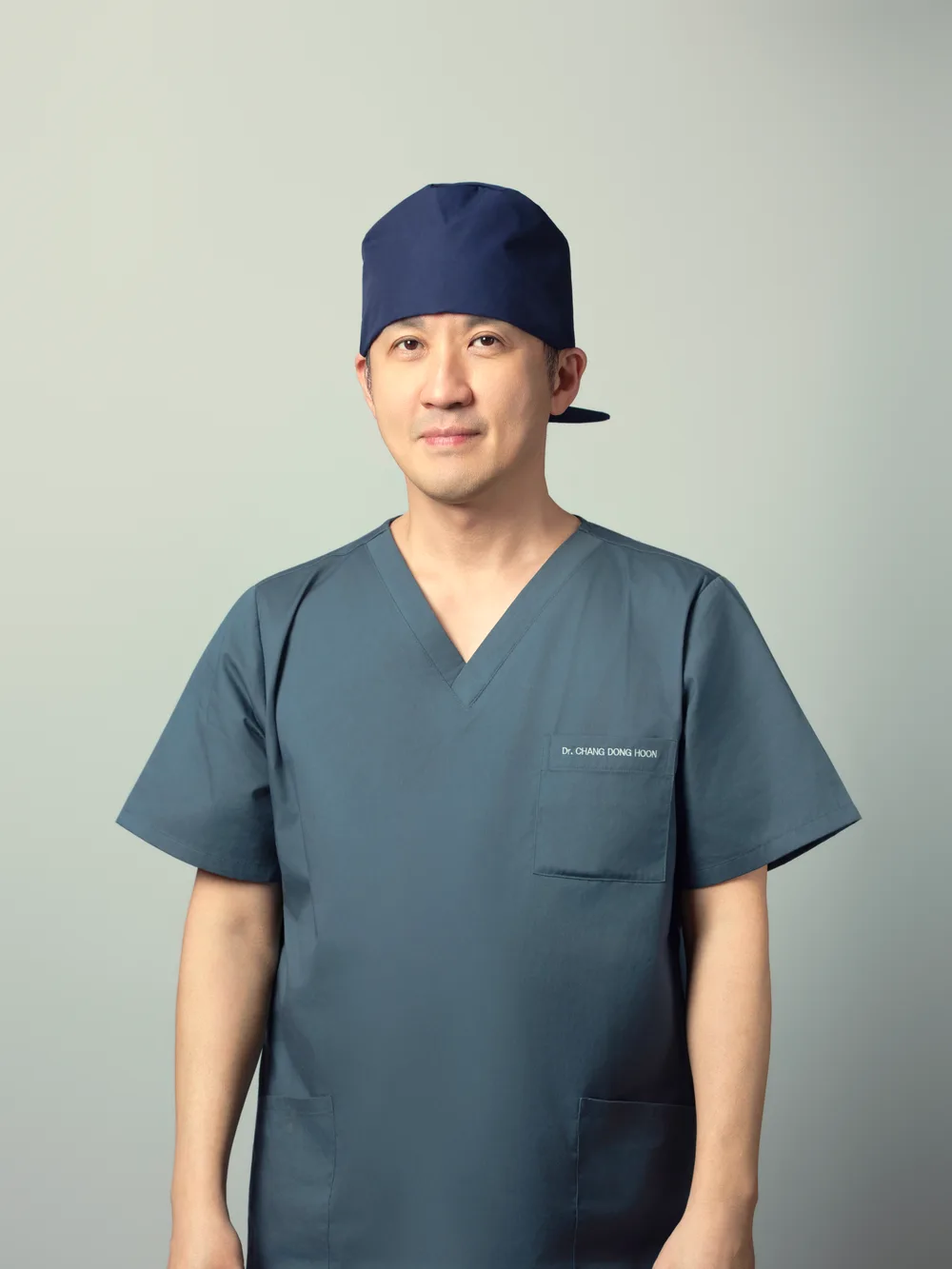
Written and medically reviewed by Dr. Jang Dong-hoon · Founder & Medical Director
Published · 9 min read
Is the pull along your jaw or the small dimple by your ear normal 2 weeks after thread lift treatment in Seoul, now that you're home?
Mostly, yes. Swelling after threads settles over the first week, so most of the puffiness should be gone by now, and a mild tug when you yawn or chew, or a shallow dimple that keeps softening, is common at this stage. A thread end you can feel or see under the skin, redness and warmth that are increasing, or pain that gets worse are the signs to act on.
Hello, I'm Dr. Jang Dong-hoon, Founder & Medical Director of THE Beautiful Clinic in Seoul, and a member of the Korean Society of Aesthetic Surgery and the Japan Society of Aesthetic Surgery.
I consult, plan and treat, and with threads the plan is mostly direction: the laxity is analysed first and the vector follows where the descent started, because over-pulling in the wrong axis is what makes thread work look done. That matters now, because a tug along the planned line reads differently from one that runs across it. You can write on WhatsApp in English, the clinic answers within 24 business hours, and if you come back to Seoul, staff interpret at no extra charge, arranged for your appointment time.
If something is bothering you today, send a daylight photo from the front and from the side, the date of your treatment and, if you have it, the thread type. With those three things in the first message, you're asking about your own face from the first line.
What your face usually feels like at two weeks
Thread lifting repositions tissue physically, and the threads keep working as collagen forms along their length. That second part is why the face can still feel busy when it already looks calm. Most people are back to their routine the day after treatment and the swelling settles over the first week, so at 2 weeks after thread lift treatment what remains is quieter.
Common at this stage:
Risks and side effects to know
- A pulling feeling when you open wide, yawn or laugh, easing week by week
- Faint yellow or green traces of bruising, since threads can bruise
- Small bumps or a slight ridge along the thread line that you feel more than see
- A patch of numbness or tingling near the line
- Closed entry points that look like tiny pink dots
- More sensitivity to sun, which the American Society of Plastic Surgeons lists among thread lift risks
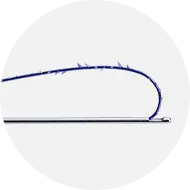
The pull has a reason. Cog threads hold tissue by gripping it, so the skin over them takes time to drape again, while a mono thread placed for density usually gives less tug. If you're not sure which you had, the overview of what threads do and how long you swell describes the types, and the thread lifting treatment page lists the five the clinic uses: Ultra V mono for density, cog for lift, Jamber for collagen volume, and HIKO PCL or PDO for the nose.
Is a dimple or a ridge something to worry about?
Usually not, if it is softening. A dimple near an entry point or along the line often comes from tissue gathering where the thread grips. A 2021 commentary in Aesthetic Plastic Surgery on a meta-analysis of thread lift complications put it plainly: most of these dents iron themselves out within a week or two, and the authors argued that dimpling which settles within four weeks shouldn't count as a complication at all.
What changes the picture is direction. A mark that gets deeper or sharper over several days, or skin over a thread that looks thinner, shinier or paler than the skin around it, is worth a photo now.
Say you had cog threads along the jawline in Seoul, flew home to London on day three, and on day fifteen you notice a firm little ridge in front of your ear when you smile. If it isn't red or warm and it looked bigger last week, I'd photograph it in the same light every two or three days and let it soften. If the skin over it is thinning, or you can feel a sharp end, the thread may be working toward the surface, and that photo should go on WhatsApp today.
Asymmetry at two weeks deserves the same patience, with one exception. Swelling settles at different speeds on each side, but a side that sits lower now than it did on day three is worth sending.
Which signs need a message to Seoul, and which need a doctor at home today?
The ASPS lists the main thread lift risks: swelling and bruising, infection, extrusion of a thread, difficulty opening the mouth that is usually temporary, pain that can persist, and an unfavorable result. In the pooled figures that 2021 commentary cites, swelling and dimpling were the most often reported problems, with infection in 3.1% and thread extrusion in 3.9%. Most of these change slowly and photograph well. Infection is the one that can turn quickly.
| What you notice | What it can mean | What to do |
|---|---|---|
| A tug or ridge that is softening | Normal settling | Photograph weekly and keep watching |
| A thread end you can feel or see | A thread moving toward the surface | Daylight photo on WhatsApp now |
| Red, warm, more swollen each day, pus or fever | Possible infection | See a doctor at home today, then message |
| Mouth opening still limited, pain rising | Thread position or inflammation | Doctor at home soon, photo to Seoul |
Some faces settle faster than others, so judge the trend over several days, not one morning in the mirror. The advice the CDC gives anyone treated abroad is to keep copies of your records and plan for follow-up care at home; for threads, that means the treatment date, the area and the thread type written down before you leave Seoul.
When a sign from the table shows up, send two photos of the spot in daylight, one close and one of your whole face from the same side, with the number of days since treatment. Then ask the one question that matters: is this settling, or does it need to be seen?
What to tell a doctor, dentist or therapist at home
The person treating you at home doesn't know there are threads under your skin unless you say so. Three situations come up in the weeks after a trip.
A facial or device treatment. Before any energy treatment, the clinic asks about fillers or threads placed in the last six months so the energy can be planned around them, never over them. Give a provider at home the same information, and skip deep massage facials over the threaded area for the first weeks.
A dentist. Long appointments with the mouth held wide strain the cheeks where threads sit. If you can, move routine dental work a few weeks out, and mention the threads if it can't wait.
A doctor checking a possible infection. Bring the treatment date, the area and the thread type. If they ask whether the thread brand matters, my piece on whether the country a thread is made in really matters explains what actually differs between threads.
If the threads were in your nose, the guide to what a HIKO nose lift covers, thread by thread explains which type you likely had and why the nose behaves differently from the cheek.
When does the lift look settled?
Later than two weeks. The threads keep working as collagen forms along them, so the face you see now is still changing. I'd judge the shape once the swelling and the tug have both faded, and compare it against photos taken before your trip in the same light.
Sun matters in this phase. Sensitivity to sun is on the ASPS list, and inflamed skin can darken; the notes on dark spots after 40 explain why daily sunscreen on healing skin is worth the habit. Keep a hat on for the first weeks outdoors.
If a second trip is on your mind, plan it around the settled result. The clinic's English site lists the lifting options that can follow threads, and energy treatments are planned around threads that are still new.
A photo and your treatment date are enough to start, and you can ask before booking anything. Send them on WhatsApp with the question that's on your mind about your own face this week. If you come back to Seoul, the first thing I check is the direction the threads are holding against the direction the tissue wants to fall, because that tells me whether anything should be added or simply left to settle. To pick dates, tick Thread Lifting in the booking selector.
At a glance
Thread Lifting at a glance
- Works onSubcutaneous planeDowntime2–5 days of swellingTypically lasts6–12 monthsFrom≈ $371₩499,000
Which one fits is decided at the examination, not from this table. Prices are the lowest listed option, before 10% VAT. US dollar figures are approximate, at the exchange rate of 10 November 2026. The clinic charges in Korean won.
The short version
- Swelling after threads settles over the first week, so by day fourteen most of it is gone.
- A mild tug or a dimple that keeps softening is common; a thread end you can feel is not.
- Spreading redness, warmth, pus or fever need a doctor at home that day.
- Tell any provider at home about the threads before an energy treatment, deep massage or long dental work.
- Judge the shape once the tug fades, against photos taken before the trip.
Questions patients ask
Can I sleep on my side now?
Many doctors ask for back sleeping for about the first week. By two weeks most people can return to their usual side gradually, as long as lying on it doesn't hurt. If one side still aches under pressure, give it a few more nights.
When can I go back to the gym or a sauna?
At two weeks most people can return to normal exercise. Heat from saunas and hot yoga can bring swelling back, so ease in and stop if the area throbs or feels hot afterwards.
Can I wear makeup over the entry points?
Once the entry points have closed and aren't red, which by two weeks they usually have, makeup is generally fine. Use a clean brush and remove it with gentle pressure, without dragging along the thread line.
What if a thread end is poking out?
Don't pull or cut it yourself. Cover it with a clean plaster, photograph it in daylight and send the photo with your treatment date. If the skin around it is red or warm, see a doctor at home; a thread close to the surface can often be trimmed or removed in a short visit.
Do I need medicine at home if it gets red?
That is a decision for the doctor who sees the redness in person. Redness that is spreading, hot or painful, especially with fever, needs an exam where you are rather than a wait-and-see.
What decides the cost if I want more threads on another trip?
The thread type, the number of threads, the area such as midface, jawline or nose, and whether anything else is added. Ask on WhatsApp with a current daylight photo; there is no deposit, and changing or cancelling is free.
Results and recovery vary between individuals, and every treatment can have side effects. Prices are from the clinic's price list and are confirmed at consultation. This article is general information, not a diagnosis.
Sources
About the author
Dr. Jang Dong-hoon
Founder & Medical Director
Founder and medical director of THE Beautiful Clinic in Nonhyeon, Gangnam. He sees every patient's skin analysis before a plan is drawn, and reviews every article on this blog against what the clinic actually does.
Credentials in full