
Visiting Korea
Korean vs European thread lift: does the origin matter? Cost, reviews, methods
Material, barb design and placement technique shape a thread lift more than the country that made the thread. Tell us about any filler or threads from the last 6 months before a lifting treatment.
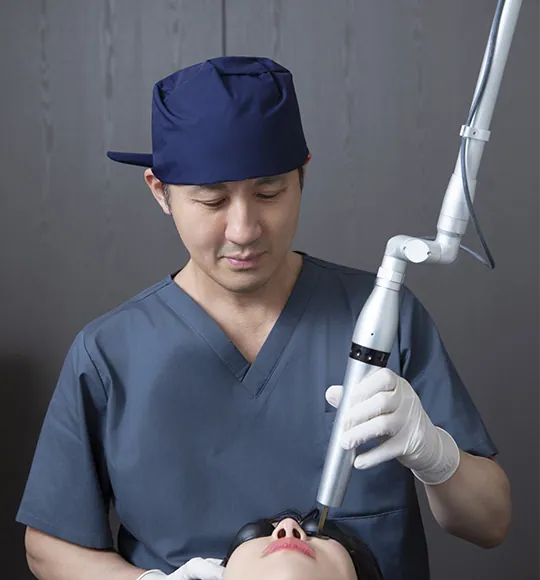
Written and medically reviewed by Dr. Jang Dong-hoon · Founder & Medical Director
Published · 10 min read
Torn over Korean vs European thread lift options, and worried you'll pick a thread that sags again or that you can feel in your cheek once you're back home in Jakarta?
Before you book a thread lift in Seoul, take a few minutes to read this to the end.
By the end you'll know what decides the cost, which review claims hold up medically, and which methods and thread materials exist. That way you can judge which option makes sense for your face, your leave days and your budget.
The short answer: what separates results is the thread material (PDO, PLLA or PCL), the shape of its barbs or cones, its thickness, and the technique of the doctor placing it. Factories in Korea and in Europe can make threads from the same material.
If you'd like to ask whether your cheeks or jawline suit threads, send one front-facing photo of your face in daylight on WhatsApp, along with the one question that bothers you most.
What actually makes one thread different from another?
A lifting thread is an absorbable medical thread. It goes in through a thin needle into the layer under the skin. Threads with small barbs (often called cogs) or tiny cones hold tissue in a higher position. The body then forms connective tissue around the thread, and the thread is slowly absorbed.
So three things change how a thread works: what it is made of, how strong and how many its barbs are, and how thick it is. A case report in Dermatologic Therapy (2020) described barbed threads too thick to be absorbed well. Thickness is not a small detail.
Material decides how long the thread stays in the tissue. According to a report in Plastic and Reconstructive Surgery Global Open (2021), a size 0 barbed PDO thread is generally absorbed within about six months. PLLA and PCL threads are generally absorbed more slowly. The country of manufacture doesn't change the chemistry, so the Korean vs European thread lift difference lies more in the specific product than in the country.
Methods and thread materials in common use
When people compare a Korean vs European thread lift on forums, what they're really comparing is usually two things: material and design. This table sums up the materials most often discussed in the medical literature.
| Material | What is generally known | What to ask |
|---|---|---|
| PDO (polydioxanone) | Most widely used, absorbed relatively fast | Thread size and number of barbs |
| PLLA / PLGA | Absorbed more slowly, often cone-shaped | Roughly how long the thread lasts |
| PCL (polycaprolactone) | Generally absorbed more slowly than PDO | Which areas suit this material |
Then the design. Broadly there are three methods:
- Mono (smooth) threads: they don't lift; they're used to stimulate tissue in small areas.
- Barbed (cog) threads: small barbs along the thread hold cheek or jawline tissue.
- Cone threads: small cones along the thread act as anchor points for tissue.
Manufacturers in Korea and in Europe both make threads with these designs. That's why we'd rather talk about "a barbed PDO thread of a given size" than about "a Korean thread" or "a European thread". Our own menu lists Ultra V mono and cog threads, Jamber volume threads, and HIKO PCL or PDO threads made for the nose only, which the HIKO nose lift price guide covers. Swelling, downtime and the procedure itself are in our thread lift Korea guide and on the Thread Lifting page.
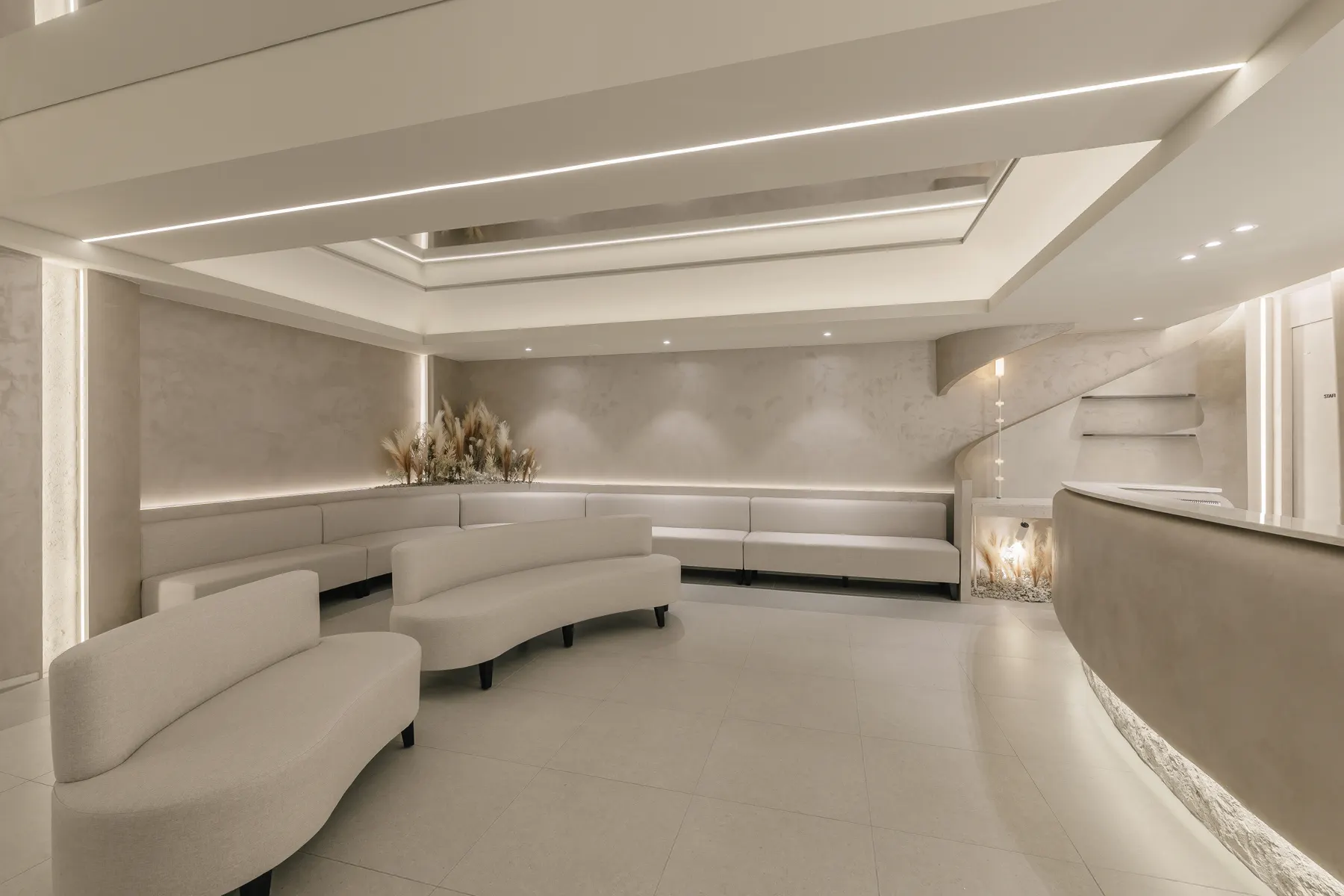
A thread lift in Seoul versus at home: the process is what differs
The same thread can be placed in Jakarta or in Seoul. The difference is the order of the examination, who places the threads, and who watches over you once you're home.
At our clinic the consultation begins with a 3D skin scan, and the doctor who plans the threads is the one who places them. If you've had filler or threads in the last six months, tell us beforehand. For energy-based lifting, we plan the energy around that area, not on top of it.
What differs most from a thread lift close to home is follow-up. In Jakarta you can go back to the same doctor next week, while from Seoul you fly home with threads in your face and a doctor in Indonesia needs to know what's there. The U.S. Centers for Disease Control and Prevention (CDC) advises medical travelers to bring copies of their medical records and to plan follow-up care before leaving. For threads, that means: ask for and keep a note of the material, size, number and placement area.
Say you're 38, your lower cheeks are starting to drop, your skin is fairly thin, and you have four days in Seoul. In consultation we'd first look at how heavy the tissue is that needs holding and how thin the layer above the thread would be. In thin skin, barbs more easily cause small dimples on the surface, so we're careful with the number and depth of threads. Sometimes the answer is energy-based lifting instead, or a smaller plan first.
Reviews of Korean and European threads: which claims are true?
On forums and TikTok, a few claims come up again and again. Here is how they read medically.
- 'European threads last longer.' Partly true, but the reason is material. PLLA or PCL threads are generally absorbed more slowly than PDO, wherever they're made.
- 'Korean threads are lower quality.' There's no medical basis for this. What to check is the material, the size and the product's regulatory approval.
- 'The result shows right away, then drops a little.' This is common. The early pull from the barbs usually eases a little once swelling settles.
- 'You can feel or see the thread.' True, and documented in the medical literature: small skin dimples and thread ends coming out are reported complications.
Risks and side effects to know
Common temporary reactions are bruising, swelling, tightness and a pulling feeling when you open your mouth wide or chew. On our menu, swelling after a thread lift is recorded at 2 to 5 days, and in the literature these reactions usually settle within a few days to about two weeks.
Less common complications include skin dimpling, asymmetry, thread ends that poke or come out, and infection. A report from China in Plastic and Reconstructive Surgery Global Open (2021) linked most complications to technique and knowledge of facial anatomy more than to the thread material. In the Dermatologic Therapy (2020) case report, mild dimpling improved with manual therapy by the doctor, while an extruding thread was removed.
As general guidance, wait or discuss it first if:
- you have inflamed acne or an infection in the area to be treated;
- you are pregnant or breastfeeding;
- you take blood thinners or have a bleeding disorder;
- you tend to form keloids or have an active autoimmune disease;
- you recently had filler or threads in the same area.
If, after you return to Indonesia, you notice worsening pain, spreading redness, fever, pus, or a thread end pushing through the skin, see a doctor near you promptly and show them the note on your thread material. Don't pull or cut a thread yourself. You can also send us a photo of the area on WhatsApp. Results and recovery differ from person to person.
If what worries you most is thin skin or past filler in your cheeks, send a side-view photo of your face in daylight and list any treatments you've had in the last six months.
What decides the cost of a thread lift?
The cost of a thread lift isn't set by a Korean or European label alone. The factors that usually move it:
- Thread material and type (PDO, PLLA, PCL; smooth, barbed or cone).
- The number of threads, which follows how heavy the tissue to hold is.
- The area treated: lower cheeks, jawline, neck, or several areas at once.
- Whether threads are paired with energy-based lifting such as Thermage FLX or Ultherapy Prime.
- The number of visits and days you need in Seoul.
On the list of 20 August 2026, the Signature midface lifting and the Signature V-line lifting are 1,990,000 KRW each, and Jamber volume with 4 threads is 499,000 KRW. Prices are from the list of 20 August 2026 and exclude 10% VAT. The final figure is confirmed at consultation, after the 3D Meta-Vu scan and before anything is started.
Payment is made at the clinic. For an estimate for your case, ask on WhatsApp what it would cost for the area you want to tighten, with one photo. You can also book a thread lift and tick anything else you want to ask about.
How many days in Seoul, and what to do after you fly home?
Our clinic is on the 2nd floor of the Jinryeong Building, a two-minute walk from Exit 5 of Nonhyeon Station (Sinbundang Line). We're open Monday to Thursday 10:30 to 19:30, Friday to 20:30, Saturday to 16:30, with a weekday lunch break from 13:00 to 14:00 and none on Saturdays. We're closed on Sundays and public holidays.
Because bruising and swelling are usually most noticeable in the first days, leave a few days in Seoul after the treatment before your flight home, and confirm the number of days at the consultation. Avoid scheduling the treatment on a Saturday if you fly on Sunday, since the clinic is closed if you want a check.
Once home, avoid strong facial massage and opening your mouth very wide for the first few weeks; this is general advice for barbed threads. If you wear a hijab, choose a style that doesn't press hard on your cheeks in the first days. Keep the note on thread material and number on your phone, so a doctor in Indonesia can see it if needed.
Dr. Jang's profile and his memberships in Korean and Japanese medical societies are on the our doctors page.
The first step is small: send your Seoul dates and one front-facing photo on WhatsApp, and ask one thing, such as which thread material suits your jawline and what it would cost. You can ask before booking anything, and we reply within 24 business hours. When you come, the doctor examines your face and recommends the plan that fits, whether that's threads, another device, or a smaller plan.
The short version
- The Korean or European label says little about how a thread works; material, design and thickness do.
- Barbed PDO threads are generally absorbed faster than PLLA or PCL.
- From Seoul you fly home with threads in your face: keep a note of the material, size, number and area.
- Cost depends on material, number of threads, area, pairing with lifting devices and your days in Seoul.
Questions patients ask
Do European threads always last longer than Korean threads?
Not always. How long a thread lasts depends mainly on its material. PDO threads are generally absorbed faster, while PLLA and PCL are generally slower, whichever country made them. Your facial structure and habits also play a part.
Do I need to know the brand of thread used?
More useful are the material, size, number and placement area. Ask at the consultation and keep the note on your phone. If you ever need to see a doctor in Indonesia, this information helps them understand what is in your face.
Can a thread lift be combined with Thermage FLX or Ultherapy Prime?
It can be considered, but the order matters. Tell us about any filler or threads from the last six months, because we plan device energy around that area, not on top of it. Whether a combination makes sense for your face is discussed after the examination.
If a thread can be felt or seen, can it be fixed?
In medical reports, mild dimpling often improves with manual therapy by a doctor, and an extruding thread can be removed. Don't try to pull or cut a thread yourself. See a doctor and show them the note on your thread material.
When can I fly home to Indonesia after a thread lift?
Bruising and swelling are generally most noticeable in the first days, so leave a few days in Seoul after the treatment. The right number of days for your plan is discussed at the consultation.
Can I ask questions in Indonesian?
Yes. On WhatsApp we reply in Indonesian or English, within 24 business hours. One photo of your face and one question are enough to start.
Results and recovery vary between individuals, and every treatment can have side effects. Prices are from the clinic's price list and are confirmed at consultation. This article is general information, not a diagnosis.
Sources
About the author
Dr. Jang Dong-hoon
Founder & Medical Director
Founder and medical director of THE Beautiful Clinic in Nonhyeon, Gangnam. He sees every patient's skin analysis before a plan is drawn, and reviews every article on this blog against what the clinic actually does.
Credentials in full