
Lifting
Thread Lift vs Fillers on a Short Seoul Trip: Sag or Hollowness, Days and Cost
Filler restores volume that has flattened, and threads lift tissue that has dropped. On our list a Signature midface thread lift is 1,990,000 KRW and general facial filler starts at 89,000 KRW per 1cc, before 10% VAT.

Written and medically reviewed by Dr. Jang Dong-hoon · Founder & Medical Director
Published · 10 min read
Thread lift vs fillers: if you can book only one treatment on a short Seoul trip, and your face looks more tired than it did three years ago, which one answers what you actually see in the mirror?
Filler puts back volume that has gone flat; a thread lift moves tissue that has slid down. Filler can usually be done right after the consultation, while thread swelling settles over the first week, so threads need the first clinic day of your trip.
Hello, I'm Dr. Jang Dong-hoon, Founder & Medical Director of THE Beautiful Clinic in Gangnam.
I consult, plan and treat, so the person who chooses between threads and filler for you is the one who treats you. The consultation begins with a 3D scan of your skin, not with a price list, and before anything is injected I map asymmetry, hollowing and muscle pull across the whole face. Clinic staff interpret in English at no extra charge, arranged for your appointment time.
Send two daylight photos on WhatsApp, one from the front and one from the side, with the dates you land and leave. The side view shows a drop along the jaw that a front selfie hides, and your dates show at a glance whether threads still fit the trip.
Hollow or dropped: the question that picks the method
A face ages in two ways at once, and they look alike in a bathroom mirror. Fat pads in the cheek shrink, so the midface flattens and the under-eye looks hollow. Separately, the tissue loosens and slides toward the jaw, which deepens the fold beside the mouth and softens the jawline. Filler answers the first. Threads answer the second.
The mistake I worry about most is treating one with the other. Filler pushed into a fold that comes from descent adds weight where the face is already heavy, and the lower face can end up looking fuller instead of fresher. Threads placed in a face that is mostly hollow pull on skin with little underneath, and the lift has nothing to hold.
Here is a check you can do at home tonight. Lie flat on your back, hold your phone camera above your face, then take the same photo sitting upright. If the lying-down photo looks clearly younger, gravity is doing much of the work, and threads deserve a serious look. If the hollows under the eyes and across the cheeks stay just as deep lying down, lost volume is the bigger part, and filler fits better.
Many faces in their thirties show a little of both. Seen this way, the thread lift vs fillers choice is about which change leads, and the two photos usually make that visible before you ever sit in a clinic chair.
What each one does under the skin
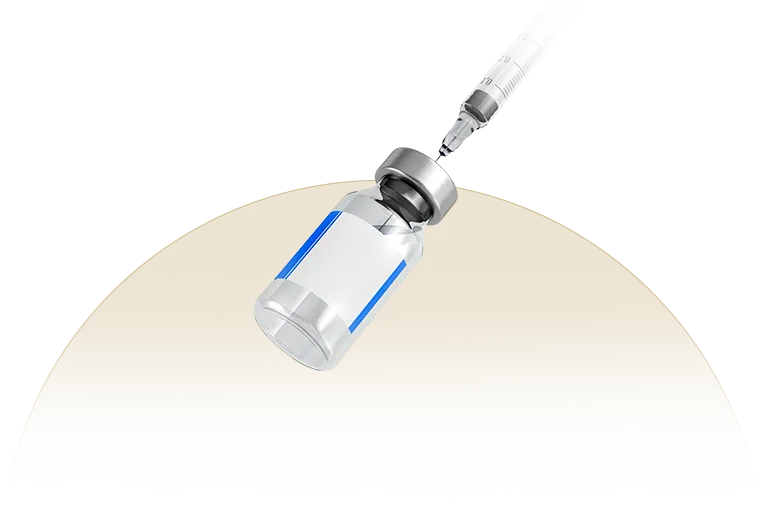
Hyaluronic acid filler is a gel placed into a chosen layer to replace volume. You see the change on the day, and the body breaks the gel down over time, as the FDA explains in its overview of dermal fillers. If you dislike the result, hyaluronic acid can be dissolved with an enzyme, and a filler dissolving injection is on my menu.
If the scan points to volume, the contour filler page lists the areas we treat, and the filler price guide sets out the list prices. If it points to threads, how long a thread lift lasts covers what to expect after the first weeks, and you can tick thread lifting in the booking selector once your dates are set.
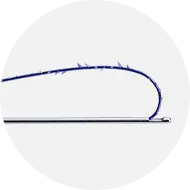
A thread lift works mechanically. Thread lifting repositions tissue, and the threads keep working as collagen forms along their length. Direction matters more than the number of threads: I plan the vector from where the descent started, not from where it is most visible, because over-pulling in the wrong axis is what makes thread work look done. The thread lifting treatment page lists the five thread types I work with, from mono threads for density and cog threads for lift to a volume thread for collagen and separate threads for the nose bridge.
If you want the longer background, the Thread lift Korea guide covers how threads behave week by week, and another post looks at whether it matters where a thread is made.
| Filler | Thread lift | |
|---|---|---|
| What it corrects | Volume that has flattened or hollowed | Tissue that has moved downward |
| Back in public | Often the same day, unless a bruise appears | Usually back to routine the next day; swelling settles over the first week |
| Marks you may see | Bruising or small swelling at injection points | Entry-point marks, swelling, sometimes a small dimple |
| If you want to undo it | Hyaluronic acid can be dissolved with an enzyme injection | Absorbable threads dissolve over months; there is no enzyme for them |
| Best day of your trip | Any clinic day after the consultation | The earliest clinic day you have |
Which fits a four-night Seoul trip?
Say you're 31, working in Singapore, landing at Incheon on Thursday night and flying home on Monday evening. The clinic is open Friday from 10:30 to 20:30 and Saturday from 10:30 to 16:30, and it is closed on Sunday. That calendar decides more than most people expect.
Risks and side effects to know
If threads are the answer, Friday is the day. Thread lifting needs entry points only, with no incision, and most people are back to their normal routine the next day, but swelling settles over the first week. On this calendar you would board on Monday with some puffiness left, which a mask covers on the plane. Doctors commonly ask you to avoid wide yawning, chewy food, facial massage and sleeping face down for the first couple of weeks, so plan Seoul meals that don't involve tearing at grilled meat.
If filler is the answer, Friday or Saturday both work, since injectables can usually be done straight after the consultation. A bruise, if one appears, is the main thing that would show at the airport. Book the earlier slot anyway: a Saturday afternoon treatment leaves Sunday, when the clinic is closed, between you and the next open hours on Monday at 10:30. The post on the first five days after filler in Seoul walks through that window day by day.
With only two nights in Seoul, filler fits the trip. Threads become a question for a longer stay, when the first week of swelling can pass before you fly.
Bruising, dimpling and the rare vessel problem
The usual reactions differ between the two. After filler, expect tenderness, mild swelling and sometimes a bruise at the injection points for several days, and occasionally a small firm spot that softens. After threads, swelling and tenderness when chewing are usual in the first week, along with entry-point marks. Skin dimpling, visible threads, infection and asymmetry are on the thread-lift risk list from the American Society of Plastic Surgeons, and a pooled review in Aesthetic Plastic Surgery found most reported thread complications were minor, such as bruising and dimpling.
The rare serious risk belongs to filler. The FDA lists accidental injection into a blood vessel, which can damage the skin and, rarely, affect vision.
As general medicine, wait or skip either treatment if any of these apply:
- an active skin infection, cold sore or acne flare where the needle or thread would go
- pregnancy or breastfeeding
- isotretinoin in recent months, or any medicine that affects healing or bleeding
- a known allergy to filler ingredients or the numbing agent mixed into many fillers
- filler or threads already in the same area; tell me the month and the area, because new work has to be planned around old
Redness and swelling: what to watch for
If skin near a filler site turns white, grey or blotchy, if pain is out of proportion, or if your vision changes, go to an emergency department that day. Do not wait for a message reply, since the clinic answers within 24 business hours. Spreading redness, heat or pus around a thread after the third day, or a fever, needs a local doctor. A thread end poking through the skin should be shown to a doctor, never pulled. Before you leave Seoul, ask for the product, amount and areas of filler, or the thread type and count, in writing, so a doctor at home works from facts. How long swelling lasts differs from person to person.
If you've had filler or threads before, add the month, the area and the product name if you know it to your WhatsApp message. Earlier work in the same area changes the plan, and having those three details ready means your consultation time goes on your face instead of on remembering dates.
What moves the cost of threads or filler?
For filler, the cost moves with the amount, counted in cc, and with the area, since brow bone, under-eye, lip and general facial filler are priced as separate items. Whether you choose a Korean or an imported product changes it too. If old filler needs dissolving first, that is a separate injection.
For threads, it moves with the thread type, the number of threads and the design: a midface plan and a V-line plan are priced as different designs. Threads may also add a night to your stay if you would rather fly with less swelling, which is a cost of the trip more than of the treatment.
Ask on WhatsApp what your own case would cost, with the same two photos. Deposit and payment method are settled after the consultation, so put that question in the same message.
When I'd suggest a smaller plan, or neither this trip
Some faces that arrive with this choice need neither. If the change you see is thin, creased skin rather than lost volume or a drop, threads and filler both miss it, and skin quality treatments or an energy-based lift are the more useful conversation. You can see that range on THE Beautiful Clinic's English site. Other faces need both, and four nights is too short to do both well.
What to send before you book
Your first message can be a single photo. If you can, send the front and side pair, your Seoul dates and any past filler or threads, with one question: is what I see mostly a drop or mostly a hollow, and which day of my trip would that need? You can ask before booking anything. The clinic answers within 24 business hours, stays open until 16:30 on Saturdays, and is closed on Sundays.
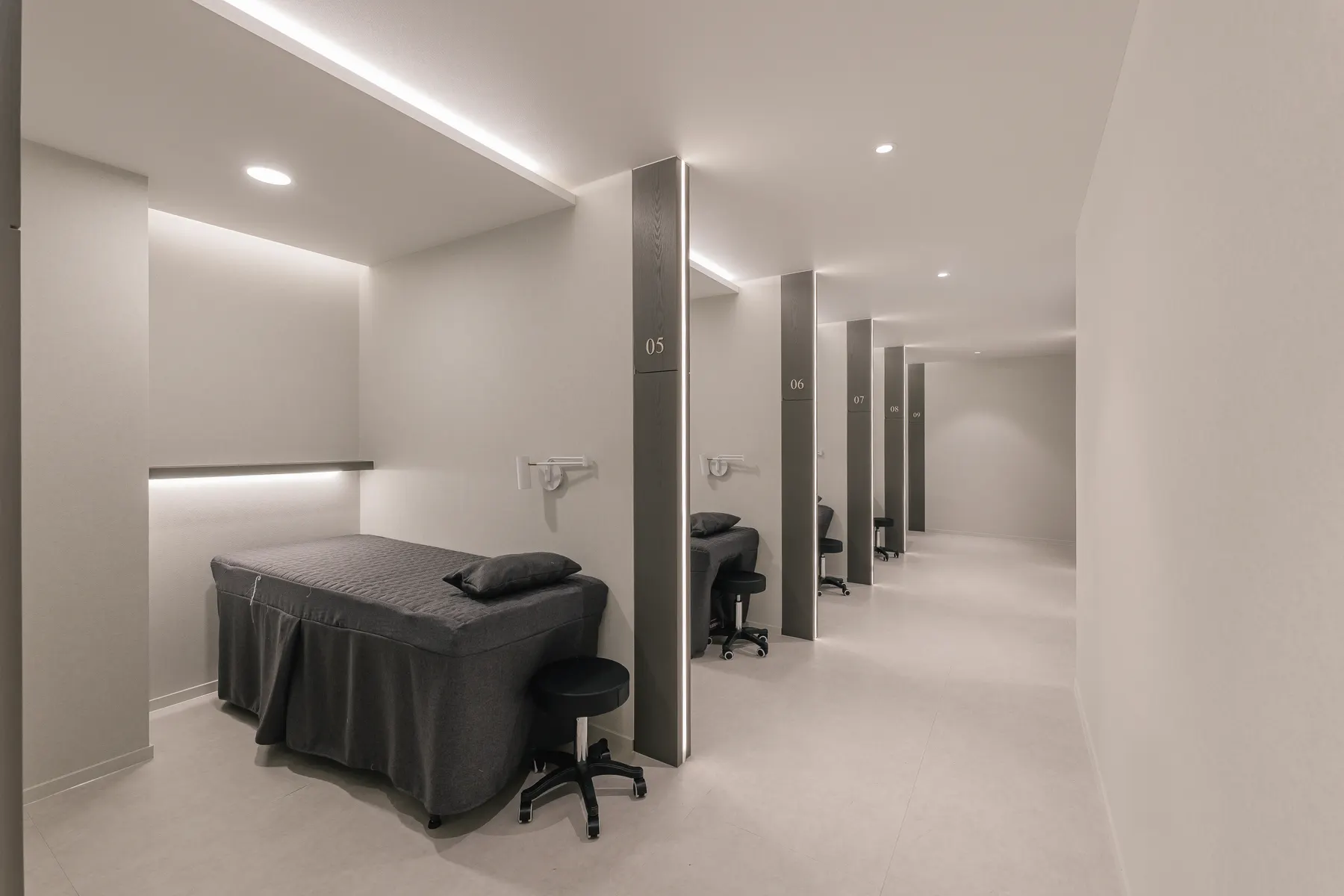
In the consultation room, two minutes from Exit 5 of Nonhyeon Station, your 3D skin scan comes up first. From there we look at where your cheek has flattened and where your jaw has softened, and only then choose threads, filler, a smaller plan or neither.
At a glance
The treatments in this article, side by side
- Works onSubcutaneous planeDowntime2–5 days of swellingTypically lasts6–12 monthsFrom≈ $371₩499,000
- Works onDeep and superficial planesDowntimePossible bruising for 2–5 daysTypically lasts9–18 months by productFrom≈ $66₩89,000
Which one fits is decided at the examination, not from this table. Prices are the lowest listed option, before 10% VAT. US dollar figures are approximate, at the exchange rate of 10 November 2026. The clinic charges in Korean won.
The short version
- Filler replaces volume that has flattened; threads reposition tissue that has dropped.
- Compare a photo taken lying down with one taken upright: a face that looks clearly younger lying flat points toward threads.
- Thread swelling settles over the first week, so threads belong on your first clinic day in Seoul.
- The clinic is closed on Sundays, so book earlier than a Saturday afternoon if you can.
- Filler cost moves with cc, area and product; thread cost moves with thread type, count and design.
Questions patients ask
Can I have threads and filler on the same trip?
Doctors often combine them when a face shows both a drop and a hollow. On a trip of four nights or fewer, one method on the first clinic day leaves more room for swelling to settle before the flight. If your face clearly needs both, ask on WhatsApp which one to start with and plan the second for a later visit.
Which lasts longer, a thread lift or filler?
Both are temporary. Hyaluronic acid filler is broken down by the body over months, at a pace set by the product and the area. Absorbable threads also dissolve over months, and the collagen that forms along them keeps part of the effect after the thread itself is gone. Choose by whether your face dropped or flattened, not by duration alone.
Does a thread lift hurt more than filler?
Both are done with local numbing. Filler feels like pressure and a brief sting at each point. Threads add a tugging sensation while each thread is placed, and chewing tends to feel tender for a few days afterwards.
Can I fly the day after threads or filler?
Cabin pressure is not the concern for either. What matters is that thread swelling settles over the first week, and that once you board, the clinic is far away. Keep the written record of the product, amount and areas in your carry-on bag.
What if I don't like how my filler looks?
Judge it after the swelling has gone, which commonly takes up to two weeks. Hyaluronic acid filler can be dissolved with an enzyme, and the clinic offers a filler dissolving injection, which is worth knowing before you choose filler on a short trip.
Am I too young for a thread lift at 30?
Age matters less than position. At 30 the change is more often a loss of volume than a drop, but some faces descend early, especially after weight loss. Comparing a photo taken lying down with one taken upright is a useful first check.
Results and recovery vary between individuals, and every treatment can have side effects. Prices are from the clinic's price list and are confirmed at consultation. This article is general information, not a diagnosis.
Sources
About the author
Dr. Jang Dong-hoon
Founder & Medical Director
Founder and medical director of THE Beautiful Clinic in Nonhyeon, Gangnam. He sees every patient's skin analysis before a plan is drawn, and reviews every article on this blog against what the clinic actually does.
Credentials in full