
Wrinkle injections & fillers
The best korean filler for a traveler is the one your home doctor can identify
The product matters less than the record you carry home and the doctor who chose it. Bruising from contour filler can last 2 to 5 days, so plan your Seoul dates around it.
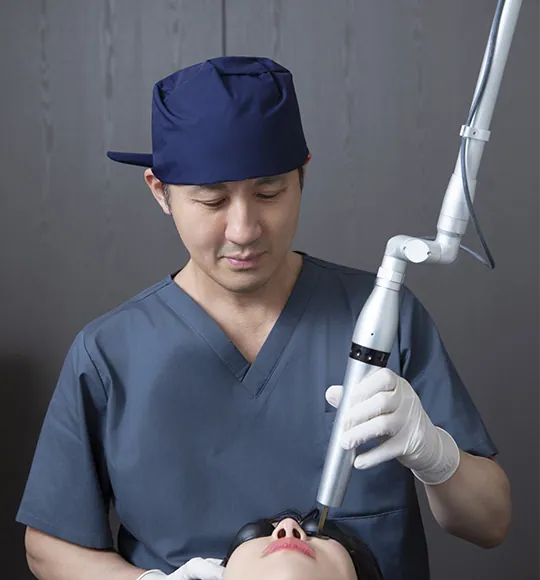
Written and medically reviewed by Dr. Jang Dong-hoon · Founder & Medical Director
Published · Updated · 12 min read
The best korean filler is one whose product, amount and depth you can show a doctor at home. Send the clinic your past filler and your Seoul dates on WhatsApp.
What does “best” mean for a Korean filler you fly home with?
Reversibility first, then fit. Hyaluronic acid (HA) filler can be broken down by an enzyme, hyaluronidase, that doctors outside Korea also use, so a problem with HA can be treated in your own city. Most other filler materials have no equivalent off-switch.
The American Society of Plastic Surgeons describes the main filler families as hyaluronic acid, calcium hydroxylapatite, poly-L-lactic acid and polymethylmethacrylate, and each behaves differently over time. The U.S. Food and Drug Administration approves each filler product for specific uses, which is why the exact product name tells a doctor more than the country printed on the box.
| Filler type | Can it be dissolved? | What it means for a traveler |
|---|---|---|
| Hyaluronic acid (HA) | Yes, with hyaluronidase | Used for lips, under the eyes and most contour work; a doctor at home can reduce it if needed |
| Calcium hydroxylapatite (CaHA) | No standard dissolving enzyme | Firmer, for deeper structure; a lump has fewer quick fixes |
| Poly-L-lactic acid (PLLA) | No | Builds collagen gradually over several sessions, so it suits repeat visits more than one short trip |
The clinic's own page describes its contour filler as working in deep and superficial planes, with mild sensation because anaesthetic is mixed into the product, possible bruising for 2 to 5 days, and a duration of 9 to 18 months by product. Those 9 to 18 months matter if you live abroad: whatever is injected in Seoul will still be there through several visits to your own doctor.
Korean filler brands and what the label tells you
Where a filler was made says less than what it was approved for and how firm the gel is. In Korea, fillers are regulated as medical devices by the Ministry of Food and Drug Safety, and Korean-made and imported products sit side by side on many clinic menus.
This clinic's filler menu, for example, lists Korean-made HA products (Atierre and Rejuviel) next to imported HA products, plus a CaHA filler. The useful difference between them is mechanical. A firmer gel holds shape in a chin or along the brow bone; a softer one spreads more evenly in lips or under the eyes. The right gel for your jaw may be the wrong one for your tear trough, even in the same session.
Those products are priced differently per cc, and the gap between a Korean-made and an imported HA is often the largest line in the budget. The Korea filler price guide lists them side by side from the clinic's dated price list.
People searching for Korean lip filler brands, or for the one product the experts use, are asking a fair question in the wrong unit. The unit that matters is product plus area plus depth. Before the needle comes out, ask for the exact product name and the amount planned for each area, and take a photo of the label or box. Those three facts are what a doctor in your country will need.
The same goes for Korean HA brands people search by name, such as Monalisa or Chaeum. Neither appears on this clinic's published price list, so ask by product name before you book flights, and expect the area to shape the plan more than the label does.
How do you check a Korean filler clinic from abroad?
Ask who injects, what happens before the syringe, and what can be done if a product needs to come out. Review sites describe the waiting room well; they rarely tell you which product went where. These checks work for any clinic in Seoul, including this one:
- Who injects. Ask whether the doctor you consult is the one holding the syringe. At THE Beautiful Clinic, Dr. Jang consults, plans and treats.
- What happens before the syringe. A filler plan should start from the whole face. The clinic's contour filler page describes an analysis of proportion, asymmetry and where volume has actually been lost, across forehead, nasolabial fold, tear trough and chin.
- Credentials you can check. Dr. Jang's listed credentials include Member, Korean Society of Aesthetic Surgery; Member, Japan Society of Aesthetic Surgery; and Adjunct Assistant Professor, Konkuk University. They are listed on the doctor's profile page.
- Whether dissolving is on the menu. A filler dissolving injection is part of this clinic's filler menu, which matters if HA ever needs reducing while you're still in Seoul.
- Opening hours against your flight. The clinic opens Monday to Thursday 10:30 to 19:30, Friday 10:30 to 20:30 and Saturday 10:30 to 16:30, and closes on Sundays and public holidays.
The clinic sits a 2-minute walk from Exit 5 of Nonhyeon Station on the Sinbundang Line, which keeps a second visit short if you need one before you leave.
Vascular occlusion, lumps and the other risks worth planning for
Bruising and swelling are common; lumps are less common; blocked blood flow, called vascular occlusion, is rare and the one to plan around. The FDA lists unintentional injection into a blood vessel among the rare but serious risks of dermal fillers, with possible skin damage, vision problems, blindness or stroke.
The American Academy of Dermatology names bruising, redness, swelling and tenderness as the usual side effects, with lumps possible. Most of these settle on their own. A lump can be swelling, product sitting slightly too close to the surface, or, weeks to months later, a nodule.
Lip filler nodules come up often in searches for a reason: lips move constantly and have little tissue to hide product in. With HA, many lumps can be reduced with hyaluronidase.
Vascular occlusion is a different matter. Learn these signs before you fly:
- Skin that turns white or pale right after the injection or within hours, then dusky, purple or blotchy.
- Pain that is stronger than the injection itself and getting worse.
- Any blurred vision, loss of vision or eye pain after filler anywhere on the face. This is an emergency; go to an emergency department immediately.
Many lip filler gone wrong stories trace back to one of these signs being mistaken for ordinary bruising. The lips and the area beside the nose sit close to arteries, which is why injection depth and technique matter more there than the brand on the syringe.
The slow risk is overfilling. Pillow face tends to build up over years of top-ups, often at different clinics in different countries, each adding a little. Filler that lasts 9 to 18 months can overlap with the next session if no one knows what is already there.
How your skin bruises and settles differs from person to person, and whether filler suits your face at all is decided at the consultation in Seoul.
If one of these risks is the reason you've held off, take one photo of the area in daylight and send it on WhatsApp with the name of any filler already in it. The team replies in English within 24 business hours.
How many days to plan in Seoul around bruising
One visit is often enough, because injectables can usually be done straight after the consultation. Korean fillers set the trip through the days after: contour filler lists possible bruising for 2 to 5 days, and the clinic's guidance is to fly 2 to 3 days after filler.
A simple order for a short stay:
- Before you fly: send your dates and mention any recent fillers, isotretinoin or medication that affects healing.
- First or second day: consultation, 3D skin scan, then treatment that day if the plan fits.
- The days after: the bruise window, so keep camera-heavy plans flexible.
- Last day: no new area and no top-up, because a bruise that starts today travels home with you.
The area changes how visible those days are. The table sorts the areas this clinic lists on its filler menu by what a traveler needs to know.
| Area | What usually shapes the choice | Trip note |
|---|---|---|
| Lips | Lip border, softness, how the lip moves | Swelling is easy to see; leave room before photos |
| Under the eyes | Thin skin, how the area folds when you smile | Bruising shows here; avoid your last day |
| Nasolabial fold | Whether the fold comes from lost volume or descent | Sometimes paired with a lifting plan |
| Chin and brow bone | A firmer gel that holds shape | Same bruise window as other areas |
| Forehead | Even spread over a broad, flat area | Ask how the amount is staged |
If a work meeting or a family event falls soon after, count backwards from that date. If a second area is added, tell the doctor how many days you have before you start, because that number shapes what is done now and what waits. Landing on a Saturday and hoping for a same-day slot is the riskiest version of this plan, since weekends and Friday evenings fill first and Sundays are closed.
What should go into your hand-off file?
A short record that lets a doctor at home understand what was done in Seoul within a minute. The U.S. Centers for Disease Control and Prevention advises medical travelers to get copies of their records before returning home and to arrange follow-up care in advance. For filler, the record is short:
- The exact product name for each area, with a photo of its label or box.
- The amount injected in each area.
- The areas, and roughly how deep: close to the skin surface or deep, near the bone.
- The date, and the clinic's name, address and phone: THE Beautiful Clinic, 2F Jinryeong Building, 545-12 Gangnam-daero, Seocho-gu, Seoul, +82-2-466-8873.
- Any medicine you were given or told to avoid.
- Every filler you've had before, anywhere, with dates if you know them.
Keep it as a note on your phone and as a printed page in your passport wallet. If you ever end up in an emergency department at home, this is the page to hand over.
The first two weeks at home
Most of what you notice in the first two weeks is expected, and a small part is not. This table sorts the common signs:
| What you notice | What it often is | What to do |
|---|---|---|
| Bruising, mild swelling, tenderness | Expected after injection | Cool compress; message the clinic with a photo if it spreads |
| A small firm bump | Swelling or product; later, a nodule | Avoid hard massage; show your local doctor if it stays |
| Vision change or eye pain | Possible vascular occlusion | Emergency department immediately |
| Redness, heat or fever days later | Possible infection | See a doctor at home the same day |
Timing shapes all of this. A filler appointment early in your stay leaves days in Seoul to watch the first bruise settle, while a Saturday afternoon treatment followed by a Sunday flight leaves no open clinic day before you leave. If smile lines are your main concern, this piece on nasolabial fold filler covers placement and the first days afterwards.
If the hollow under your eyes is the reason you are looking at filler, this guide to dark circle treatment in Korea explains when filler is the answer and when it is not.
When is filler the wrong call on this trip?
When the problem is sagging rather than lost volume, when an old product sits in the same spot and no one knows its name, or when your trip has no spare day. The clinic puts the first point simply: lifting devices tighten what is there, while boosters and fillers replace what has gone.
Other reasons to wait or choose differently:
- Your face already feels full, or friends have started to mention it. More product does not correct overfilling.
- A cold sore, spot or rash near the area. Injecting through irritated skin raises the risk of infection.
- A long-haul flight the same evening, with no time to watch for the warning signs above.
The clinic describes itself as saying no to treatments that would not help, and its contour filler work is framed as rebalancing a face, with restraint before result. For a Korean filler plan made on a short trip, that restraint is what keeps your hand-off file short and readable.
If you already know the area, open the booking selector with contour filler ticked and send that with your dates.
Send two things on WhatsApp: your Seoul dates and the name of every filler already in your face.
The short version
- Hyaluronic acid filler can be dissolved with an enzyme; most other filler materials cannot.
- Ask for the product name, amount and area before the injection and keep them in a hand-off file.
- Pale or dusky skin with rising pain, or any vision change after filler, needs emergency care wherever you are.
- Plan one visit plus 2 to 5 days of possible bruising, and fly 2 to 3 days after filler at the earliest.
- Leave days between treatment and your flight; the clinic is closed on Sundays and public holidays.
Questions patients ask
Can I have filler on the same day as my consultation in Seoul?
Often, yes. At THE Beautiful Clinic, injectables can usually be done straight after the consultation. Booking it early in your stay leaves days for any bruising to settle before your flight.
How long does Korean filler last?
The clinic's contour filler page gives 9 to 18 months, varying by product. Keep the product name, so the next doctor who treats you knows what may still be there.
How many days should I stay in Seoul for filler?
One visit can be enough, since treatment can often follow the consultation the same day. Contour filler can bruise for 2 to 5 days, so book it early in a stay of at least several days rather than on the last one.
What should I tell a Seoul clinic about filler I had elsewhere?
The product name, the area and roughly when it was injected. If you don't know the product, say so, because it changes how cautiously the same area is treated. Mention isotretinoin or any medication that affects healing as well.
Can I fly home right after getting filler?
The clinic's guidance is to fly 2 to 3 days after filler, and bruising can last 2 to 5 days. The warning signs of a blocked vessel tend to appear within hours, so treatment early in your stay gives you time in Seoul to watch for them.
Are fillers used in Korea approved?
Fillers used in Korea are regulated as medical devices by the Ministry of Food and Drug Safety. Ask for the exact product name, which lets you or your doctor at home look up what it is and where it is meant to be used.
Can I ask for a specific Korean filler brand such as Monalisa?
You can ask, and it is worth asking before you book. The clinic's published menu lists its filler products by name, and Monalisa is not on it, so send the product name on WhatsApp and the team tells you what applies to your plan.
Results and recovery vary between individuals, and every treatment can have side effects. Prices are from the clinic's price list and are confirmed at consultation. This article is general information, not a diagnosis.
Sources
About the author
Dr. Jang Dong-hoon
Founder & Medical Director
Founder and medical director of THE Beautiful Clinic in Nonhyeon, Gangnam. He sees every patient's skin analysis before a plan is drawn, and reviews every article on this blog against what the clinic actually does.
Credentials in full