
Lifting
Korean glass skin facial: what washes off in days and what builds over weeks
A Korean glass skin facial is a label for clinic steps that smooth the surface, even out tone and add density below it. Most steps are same-day presentable, while resurfacing brings 3 to 7 days of redness.
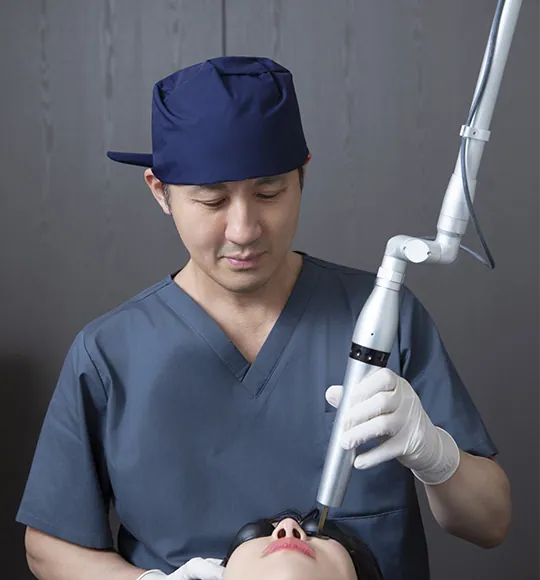
Written and medically reviewed by Dr. Jang Dong-hoon · Founder & Medical Director
Published · Updated · 13 min read
Glass skin videos are good at the hour after a facial and quiet about week six. If you've spent a few evenings saving clips and reading threads before a Seoul trip, here is the short answer: a Korean glass skin facial is a social media name for a combination of clinic steps that smooth the surface, even out tone and add density to the dermis underneath.
The hydration from the facial part usually fades within days. What still shows weeks later is whatever changed below the surface, and that depends on what your own skin is missing.
Below are five beliefs that come up again and again around glass skin treatment in Korea. For each one you'll find what is physically happening, the part that is true, and what gets checked before anything is suggested.
What is a Korean glass skin facial, actually?
A goal more than a treatment: skin that reflects light evenly, the way a clean pane of glass does. Light bounces back cleanly from a surface that is smooth, even in colour, hydrated and sitting on dense skin. It scatters from a surface that is rough, patchy or thin.
In Seoul the same phrase covers very different things. A beauty salon may mean cleansing, extraction and a hydrating mask.
A medical clinic may mean lasers, boosters injected into the skin, or radiofrequency. Those carry different risks and different results, so it helps to know which one a listing means before you book it. The clinic side of that menu is laid out on the skin booster treatment pages and the pigmentation treatment pages.
| What the mirror shows | What is usually behind it | The kind of step that addresses it |
|---|---|---|
| Rough texture that catches light unevenly | Built-up dead cells, enlarged pores, fine scarring | Resurfacing, gentle exfoliation, microneedling-type work |
| Patchy tone, spots, lingering redness | Melasma, sun spots, freckles, post-acne marks | Picosecond, nanosecond, vascular or long-pulse laser energy |
| Dull, thin-looking skin | Low dermal density, dehydration | Skin boosters, radiofrequency aimed at the dermis |
| Shine that turns greasy by lunch | Overactive sebaceous glands | Pore-level work such as insulated-needle RF |
Most faces have more than one row. At THE Beautiful Clinic, consultation begins with a 3D skin scan, and the scan decides which row comes first. Melasma and sun spots can look alike in a mirror and behave nothing alike under a laser, which is why the imaging comes before the device.
A first visit runs in that order: the 3D skin scan, then a conversation with Dr. Jang about what it shows and which step comes first. Lasers, boosters and injectables can often be done straight after the consultation.
The belief that one facial before your flight is enough
One session can leave skin smoother and more hydrated-looking for a few days, which is useful before a wedding or a photo shoot. A Korean glass skin facial booked the day before you fly won't build the part that lasts, because dermal collagen changes over weeks and months.
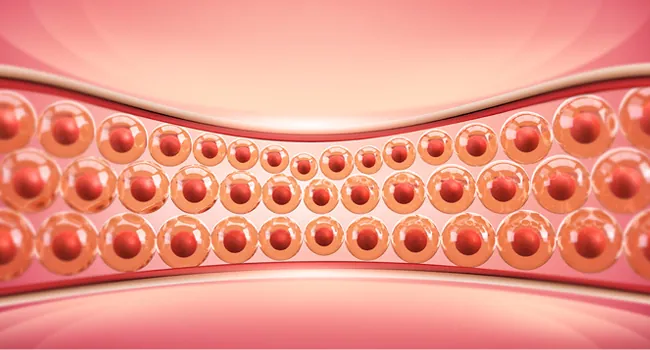
The plumpness after a hydrating facial sits mostly in the outermost layer of skin, the stratum corneum. That layer sheds and loses water every day, so the effect fades with it.
Collagen-stimulating steps run on a slower clock. With a monopolar RF device such as Oligio, collagen accrues gradually, so the result at week eight differs from the one you leave the clinic with. Collagen boosters are chosen to make the skin produce its own collagen rather than borrowing volume from a gel.
That immediate effect is still real, and for a single event it may be exactly what you want. Plan it as a short-term effect and week three won't feel like a letdown.
Can a glass skin kit at home do the same thing?
A kit can keep the surface smooth and hydrated, which is roughly half of the look. It can't reach the dermis, because the outer layer of skin is built to keep large molecules out.
A widely cited paper in Experimental Dermatology by Bos and Meinardi described the "500 Dalton rule": compounds much larger than about 500 Daltons generally do not pass through healthy skin in meaningful amounts. Many ingredients that headline glass skin products are larger than that, so they act on the surface. That still has value. It just isn't the same as a Korean glass skin facial in a clinic, where a booster is placed in the dermis or energy is delivered below the surface.
A home routine earns its place in keeping clinic results and in not undoing them:
- Daily sunscreen, since sun exposure drives new spots and uneven tone.
- Exfoliation matched to your skin type. The American Academy of Dermatology advises being gentle, choosing the method by skin type, and taking care if you already use products such as retinoids that make skin more sensitive.
- A moisturiser after cleansing or exfoliating, picked for your skin type.
- A cleanser that doesn't leave your face tight. The brand matters less than not stripping the surface twice a day.
What a kit cannot do: lift pigment that sits deeper, change how active your oil glands are, or add density to thin skin. Over-exfoliating in pursuit of shine tends to leave skin red and reactive, and reactive skin usually has to settle before any laser work.
Shine and glow are different things on oily skin
On oily skin, a glossy finish at 10 a.m. can read as grease by lunch. The glow people mean by glass skin comes from an even surface reflecting light, and sebum only imitates it for a few hours.
Oily and dry skin, and sensitive and resistant skin, are different starting points. A glass skin plan for oily, pigment-prone skin can share almost no steps with one for dry, sensitive skin. When oily skin is also breaking out, a booster is usually not the right first step.
For oily or acne-prone skin, the issue sits in the sebaceous gland. Extraction, the centrepiece of many salon facials, empties a pore that is already full and does nothing about the gland that filled it. Insulated-needle RF and fractional work reach the level where recurrence and scarring begin.
A little shine on dry, well-hydrated skin does read as healthy, though. For that skin, glass skin is often closer to a hydration and barrier question than a laser question.
Are skin boosters just hydration shots?
Some are mostly hydration. Others are chosen to make the skin build its own collagen, and those work on different timelines.
The clinic's booster range includes PN, PLA, PLLA, PDO, CaHA, exosomes and pure type-1 collagen, and each works on its own schedule. That is why the material matters more than the brand name on the box.
Polynucleotides (PN) have a systematic review behind them. Most of the protocols used 2 to 4 sessions spaced 1 to 4 weeks apart, and the authors rated the evidence as low to moderate quality.
For sensitive or reactive skin, a booster is not always the first step. Oligio, a sensor-guided monopolar RF, can be a first RF step for that skin, because the handpiece modulates output as it goes while gas cooling and vibration run alongside. There is also a closer look at five booster options for glass skin in an earlier post.
Calling the hyaluronic acid boosters hydration shots is fair, since hydration is largely what they do.
What the 3D scan decides before any laser
It decides which kind of uneven tone you have, and so which energy is used and how fast. A melasma patch, a sun spot, a freckle and leftover acne redness can pass for one another in a bathroom mirror, yet each sits at a different depth.
A small brown spot with a sharp edge is a clear target for pigment energy. A blurred, symmetric patch across both cheeks behaves differently: heat can provoke more pigment rather than less, so the energy and the pace are chosen with that in mind.
Redness left after acne is a blood-vessel question rather than a pigment question, which is why a vascular laser such as Vbeam Perfecta sits on the list beside PicoWay and Excel V+. On camera, all three problems can read as the same dull tone.
The scan also settles a question people rarely type out: whether a laser can make skin lighter. A laser targets excess pigment and does not change your natural skin tone. The American Academy of Dermatology notes that melasma can return even with a treatment plan, and that sun protection helps keep it away, so daily SPF 30 or higher stays in every plan.
The 3D Meta-Vu scan takes about 10 minutes, has no downtime and is part of the consultation, after makeup is removed. A photo sent from home gives only a rough first opinion, because pigment depth and the vessel layer do not show in a photo.
Side effects, downtime and who should wait
The risks of a Korean glass skin facial depend on which steps it contains. Searches for Korean glass facial side effects usually mean one of the rows below, and only some of them change a travel plan.
| Step | What you may notice | How long it usually lasts |
|---|---|---|
| Skin boosters (PN, PLLA, CaHA and others) | Small raised points, pinpoint bruising, a tight or stinging feeling where the needle went in | Hours to a few days |
| Picosecond laser or low-fluence toning | Flushing | A few hours |
| Vascular laser such as Vbeam Perfecta | Redness, or purpura at stronger settings | A few hours to about 1 to 2 weeks, depending on setting and person |
| Insulated-needle RF (Agnes) | Small scabs | 2 to 4 days |
| Fraxel or CO2 resurfacing | Redness and flaking | 3 to 7 days |
Booster after-effects come mostly from the needle rather than the product, and they commonly settle within hours to a few days. Breakouts are harder to predict: congested skin can flare for a few days after any step that disturbs the surface. For those first days, cleanser, moisturiser and sunscreen are enough, and a shelf of new serums tends to make it worse.
One more belief sits here: that glass skin treatments aren't for darker skin. Heat-driven lasers can trigger post-inflammatory pigmentation, dark patches that appear days to weeks later and can take months to fade, so people often blame the sun or a new cream. Picosecond lasers and low-fluence toning generally carry a lower risk of it than heat-driven alternatives, though individual skin still varies. If you know your Fitzpatrick type, mention it when you message.
Three things raise that risk on a trip: sun in the days before treatment, including a beach stop on the way to Seoul; a retinoid used right up to the morning of a laser session; and a short visit that stacks resurfacing on top of toning to fit everything in.
Tell the doctor before any laser or resurfacing, and expect the plan to change, if any of these apply:
- You take isotretinoin, or took it recently.
- You have had fillers in the past few weeks. Say which product and where.
- You use retinoids; these are paused for a few days before laser work.
- You've had strong sun exposure, a sunburn or a fresh tan in the days before.
- You have an active cold sore or infected acne in the area to be treated.
- You take any medication that affects healing.
- Your flight leaves the day after a resurfacing session.
Some signs need a doctor to look rather than more time: redness that spreads or deepens after the second day, pain that grows instead of fading, yellow crusting, or blisters. These are uncommon, and the WhatsApp thread stays open after you fly home, with replies within 24 business hours.
How your skin reacts and heals varies from person to person, and results can't be predicted from a photo or a video. None of the points above rules you out for good. Each one changes which step comes first, and being told to wait or to start with a gentler step is one possible result of a consultation.
How a glass skin plan fits a short stay in Seoul
Lasers, boosters and injectables can usually be done straight after the consultation, on the same day. Treatments with real downtime, such as fractional resurfacing, are better placed with your whole week in mind: early in the stay, so redness has days to settle before the flight home. Laser work is also better kept off the day you fly, because cabin air is dry; flying after skin treatment in Korea lists the gaps by treatment.
At THE Beautiful Clinic in Gangnam, Dr. Jang consults, plans and treats, with no counsellor package sales in between, and is a member of 13 Korean and Japanese medical societies. Consultations run in English and Bahasa Indonesia. Come with clean skin and no makeup if possible.
The clinic is on the 2nd floor of the Jinryeong Building, 545-12 Gangnam-daero, Seocho-gu, a 2-minute walk from Exit 5 of Nonhyeon Station on the Sinbundang Line. Hours are Monday to Thursday 10:30 to 19:30, Friday 10:30 to 20:30 and Saturday 10:30 to 16:30, with a lunch break from 13:00 to 14:00 on weekdays and none on Saturdays. Sundays and public holidays are closed. When your dates are fixed, the treatment booking page lists what you can request.
If you're weighing a Korean glass skin facial for an upcoming trip, send two things on WhatsApp: the dates you'll be in Seoul and one bare-skin photo taken in daylight by a window. Add your Fitzpatrick type if you know it. The clinic replies on WhatsApp, and the plan itself is set after the 3D scan in person. If you already know what you want to ask about, tick Oligio in the booking selector and send that list on WhatsApp.
What a photo from home can and cannot show before the scan is covered in why a photo can't set your skin quote.
The short version
- Glass skin is a visual goal: a smooth, even, hydrated surface sitting on dense skin.
- Hydration from one facial usually fades within days, while collagen work builds over weeks.
- Home kits act mostly on the surface, so they help keep results rather than create them.
- Oily, dry and pigment-prone skin need different plans, and a 3D skin scan sets the order.
- Fraxel or CO2 brings 3 to 7 days of redness, and dark patches on pigment-prone skin can show weeks later, so heat steps are placed early and kept gentle.
Questions patients ask
Can I have a glass skin treatment on the same day as my consultation in Seoul?
Often, yes. Lasers, boosters and injectables can usually be done straight after the consultation. Fractional resurfacing is better scheduled with the rest of your week in mind, because 3 to 7 days of redness and flaking follow.
Do I need to speak Korean at the clinic?
No. Consultations at THE Beautiful Clinic run in English and Bahasa Indonesia, and you can message the clinic on WhatsApp before you arrive.
What should I avoid before a laser or booster session?
Come with clean skin and no makeup if possible. Avoid sun exposure and retinoids for a few days before laser work, and mention any recent fillers, isotretinoin or medication that affects healing.
How long does the glow from a single clinic facial last?
The hydration from a facial usually fades within days as the outer layer of skin renews and loses water. Changes from collagen-stimulating steps build more slowly over weeks to months, and how long they hold varies by person and by treatment.
Can I get glass skin if my skin is oily or acne-prone?
Often, but the plan looks different. Oily skin needs the sebaceous glands and pores addressed, otherwise a glossy finish turns greasy by midday. Active breakouts usually need to settle before resurfacing is considered.
Can a glass skin facial make my skin lighter?
A laser can reduce excess pigment such as sun spots or some melasma, but it does not change your natural skin tone. Melasma can return, so daily sun protection stays part of the plan.
Can a glass skin facial be planned for brown or darker skin?
Yes, but the choice of energy matters. Picosecond lasers and low-fluence toning generally carry less risk of post-inflammatory pigmentation than heat-driven options, so tell the clinic your Fitzpatrick type when you message and the plan starts from it.
Results and recovery vary between individuals, and every treatment can have side effects. Prices are from the clinic's price list and are confirmed at consultation. This article is general information, not a diagnosis.
Sources
About the author
Dr. Jang Dong-hoon
Founder & Medical Director
Founder and medical director of THE Beautiful Clinic in Nonhyeon, Gangnam. He sees every patient's skin analysis before a plan is drawn, and reviews every article on this blog against what the clinic actually does.
Credentials in full