
Pigment & redness
Korea skin care for dark spots after 40: three beliefs worth correcting
Dark spots after 40 are rarely one type, and a cream from Korea cannot tell them apart. One session of our pigment programme takes 45 to 70 minutes and repeats every 2 to 4 weeks.
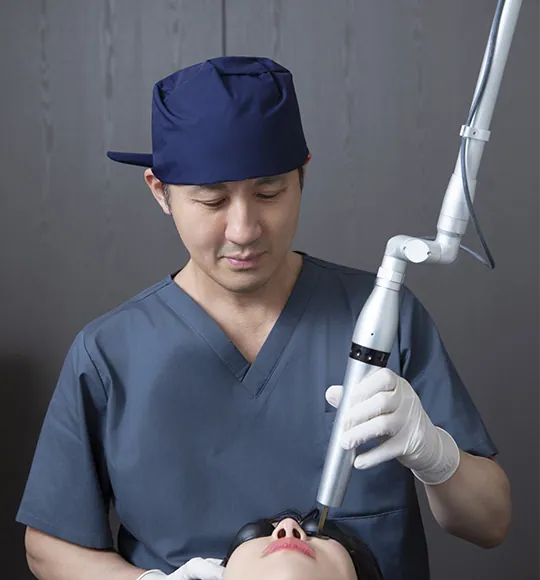
Written and medically reviewed by Dr. Jang Dong-hoon · Founder & Medical Director
Published · Updated · 9 min read
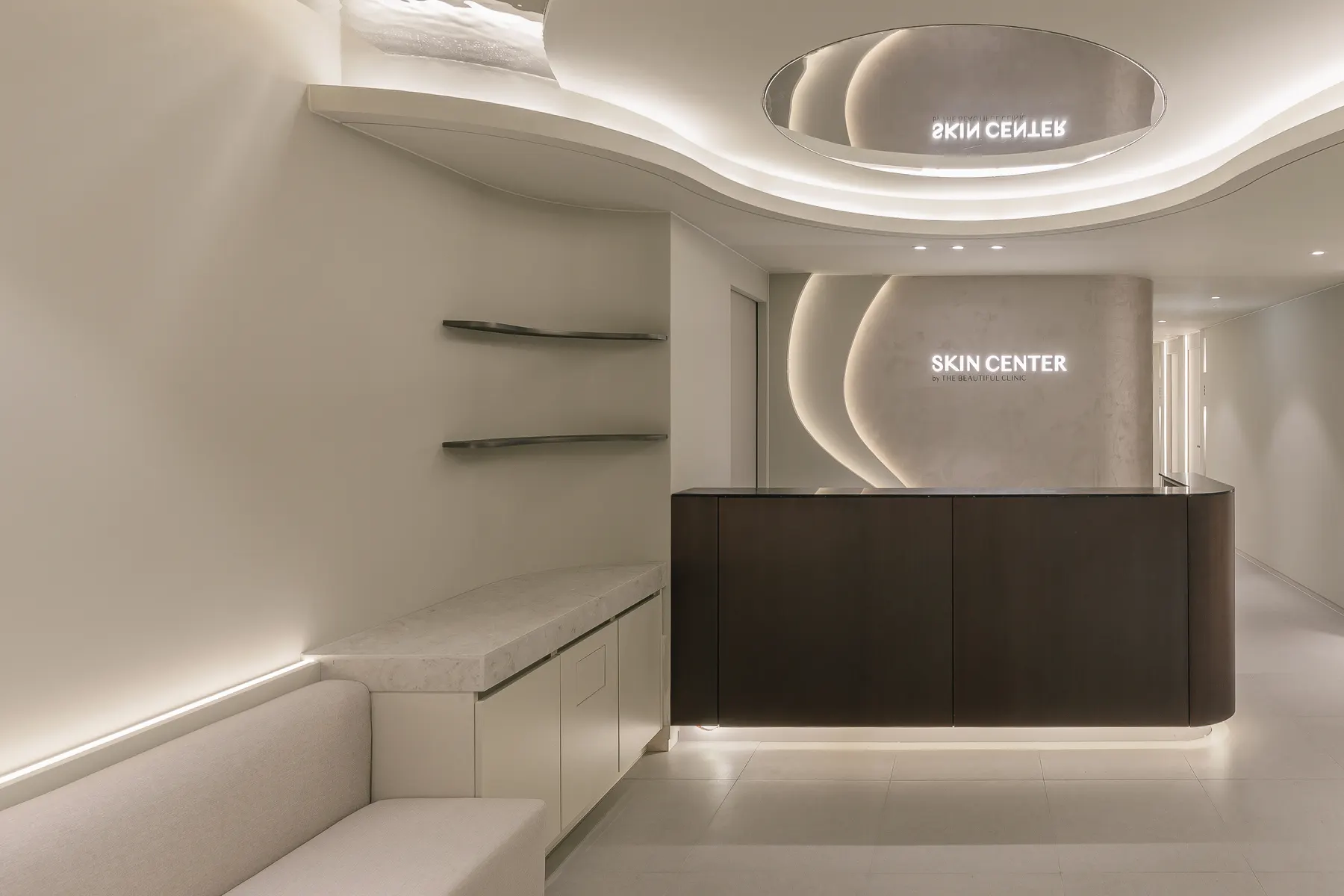
Korea skin care, in the sense of treatment at a Seoul skin clinic rather than a shelf of serums in a shop, starts with a diagnosis: which kind of dark spot is on your face, and how deep it sits. Only then are laser, peel or skin booster chosen. For many women in their 40s with medium-brown skin, the worry fits into one sentence: “What if my spots get darker after the laser?” That worry has good grounds, and the answer lies in the order of the work and the amount of energy, more than in the brand of the machine.
At our clinic, the pigment programme begins with 3D imaging. After that, picosecond, nanosecond, vascular or long-pulse energy is matched to what the scan actually shows. I consult, plan and treat myself, so the person who reads your scan is also the person who draws up your plan.
If you are not sure which kind of spot you have, send one photo of your face without makeup on WhatsApp, taken near a window in daylight, and add one question: does this look more like melasma or like sun spots? Natural light shows the colour of a spot as it is, so the first conversation starts from your own face. Messages are answered in Bahasa Indonesia or English within 24 business hours.
What does Korea skin care mean when it happens in a clinic?
On social media, Korea skin care means a layered routine: toner, essence, serum, cream, then sunscreen. That routine looks after the outermost layer of skin, and many people feel the difference. In a clinic, the question moves to layers a cream does not reach: pigment settled in the dermis, widened blood vessels, collagen that has thinned.
That is why a Seoul skin clinic menu is usually organised by skin problem. Ours is split into pigmentation, skin boosters, lifting, acne and pores, injectables, and body. For dark spots, the starting point is THE Beautiful Pigmentation Care Program, which combines several types of laser into one plan. If your main complaint is dry, dull skin without spots, our separate piece on how Korean skin boosters work and who they suit on a short trip is more relevant to you.
Some people hesitate because they picture Gangnam clinics running like a production line. We have looked at the beliefs behind the search “filler house korea” in another article. The question you can put to any clinic stays the same: who reads your skin, and is that the same person who plans your treatment?
First belief: all dark spots on the face are the same
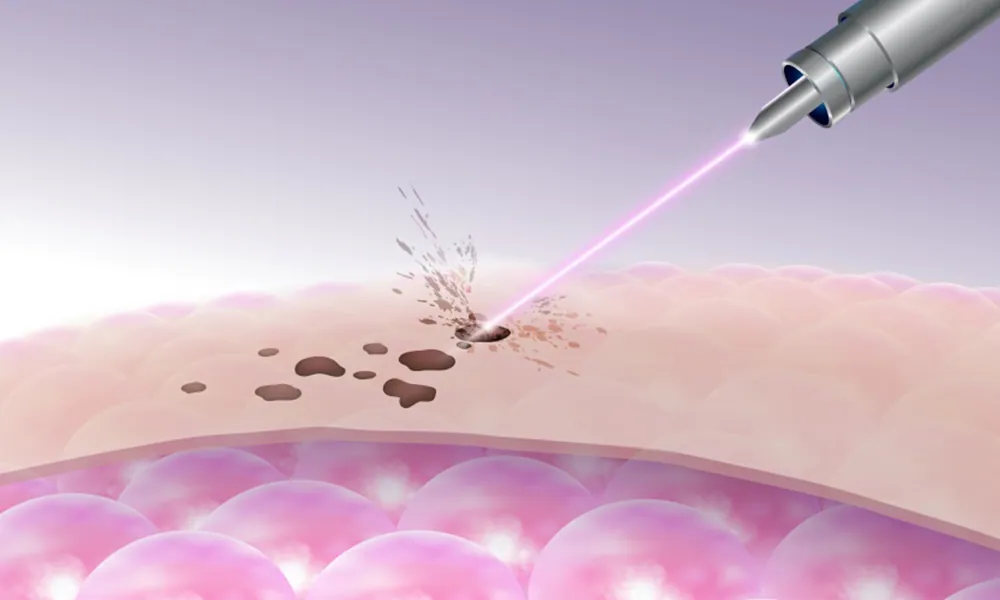
Melasma, sun spots, freckles and post-acne marks can look alike in a mirror. Under a laser, they behave very differently. Melasma usually appears symmetrically on both cheeks, the forehead or the upper lip, and is triggered by sun and hormonal change. The American Academy of Dermatology notes that melasma can return even after successful treatment, so sun protection stays a fixed part of managing it.
| Type | What you often see | General treatment direction |
|---|---|---|
| Melasma | Grey-brown patches, symmetrical on cheeks, forehead or upper lip | Low, gradual energy, daily sunscreen, regular maintenance |
| Sun spots | Sharply edged spots where the sun hits most | A pigment laser aimed at the spot |
| Marks after inflammation | Dark marks after acne, a wound or irritation | Calm the inflammation first, then a gradual fade |
| Redness | Red that does not change with skincare | A vascular laser such as Vbeam Perfecta |
The catch is that a face in its 40s rarely has only one type. Melasma and sun spots often sit side by side on the same cheek, and a setting that suits a sun spot can make the melasma next to it worse. That is why the scan comes before the choice of wavelength in our programme: in a mirror the two look alike, under a laser they need different wavelengths.
Second belief: does a stronger laser make spots fade faster?
For medium-brown skin, it is often the opposite. Pigment-making cells in darker skin tend to react to heat and inflammation. DermNet explains that post-inflammatory hyperpigmentation is more common and lasts longer in darker skin types, and can take months to fade. So energy that runs too hot can leave a new dark mark, sometimes darker than the original spot.
That is why our pigment plans include PicoWay, a picosecond laser with low thermal injury. Less heat in the tissue means a lower risk of post-inflammatory hyperpigmentation, and in Asian skin this is the risk that matters most to manage. For melasma, a systematic review in Medicina (2022) on low-fluence Q-switched Nd:YAG laser reported improvement in melasma, but recurrence and white patches from pigment loss were also recorded. Low energy still carries risk, so the settings and the interval between sessions still need thought.
If you have ever had dark marks after a laser, a peel or simply after acne, write that in your WhatsApp message along with the names of the products you use now, especially a retinoid or an acid exfoliant. These two things help decide how slowly a pigment plan needs to start, so ask directly whether your history means you should pause before the first session.
Third belief: one glass skin facial in Seoul is enough
A glass skin facial gives a glow you can see within days. Most of its steps leave you presentable the same day, while resurfacing steps bring 3 to 7 days of redness. That glow is a different matter from fading spots, and we have covered separately what a Korean glass skin facial gives you that fades within days.
Our pigment programme runs as a course. One session takes 45 to 70 minutes, repeats every 2 to 4 weeks through the course, and recovery ranges from nothing to light flaking. In other words, one visit on a Seoul holiday is only the first session of a series.
So what about the next sessions if you live in Surabaya or Jakarta? That question is best answered before you book flights. There are usually two options: plan several trips to Seoul a few weeks apart, or treat the Seoul session as a start and maintain the result with a dermatologist in your own city. The part of Korea skin care that rarely shows up in videos is what happens at home: one unprotected week in the sun can undo a month of the course.
How do you plan a visit if you only have a few days in Seoul?
The clinic is open Monday to Thursday from 10:30 to 19:30, Friday until 20:30, and Saturday from 10:30 to 16:30 with no lunch break. On weekdays there is a lunch break from 13:00 to 14:00. The clinic is closed on Sundays and Korean public holidays, so check the Korean holiday calendar before you fix your dates. We are on the second floor of the Jinryeong Building, a two-minute walk from Exit 5 of Nonhyeon Station on the Sinbundang Line.
A few things to prepare before a pigment session:
- Stop retinoids and acid exfoliants (AHA, BHA) three days before and three days after each session.
- Bring SPF 50 sunscreen and wear it every day, including while walking around Seoul.
- Avoid long sun exposure just before a session; freshly sunburned skin usually needs to wait.
- Note the medicines you take and any dark marks you have had after earlier treatments.
If you want to combine pigment treatment with a booster on the same trip, our article on planning a PN skin booster in Korea, with its terms, number of days and follow-up, helps you count the days. An overview of the whole menu is on our English home page, and on the book a treatment page you can tick what you want looked at and send the list on WhatsApp.
Risks and side effects to know
The common reactions are temporary. After a pigment laser, the skin can feel warm and look red for a few hours, and some people get light flaking for a few days. After a vascular laser such as Vbeam Perfecta, redness usually lasts a few hours. Spots sometimes look slightly darker before they fade, and on medium-brown skin post-inflammatory marks can still appear even when the energy is set low.
In general, pigment treatment should be postponed or reconsidered if:
- There is an infection, wound or active inflammation in the area to be treated.
- You have had a peel or another laser in the last few weeks.
- You are taking, or have recently finished, isotretinoin.
- You are pregnant or breastfeeding; melasma also often changes during pregnancy.
- Your skin has just been sunburned.
If, after you are back in Indonesia, you notice blisters, increasing pain, or a mark that gets darker week by week, stop active products for now, protect the area from the sun, and see a dermatologist in your city if there are blisters or signs of infection. You can also send a daylight photo of the area to our clinic on WhatsApp. Skin responds differently from person to person, and whether a treatment suits you is decided at an in-person examination.
One step you can take this week: open your calendar, make sure your Seoul dates do not fall on a Sunday or a Korean public holiday, then send those dates on WhatsApp with a photo of the spot that bothers you most.
The short version
- Korea skin care in a clinic starts with the type and depth of a spot, then the device.
- On medium-brown skin, more heat can leave a new dark mark.
- A pigment programme runs as a course and does not finish in one holiday visit.
- Daily sunscreen shapes the result as much as the clinic sessions do.
Questions patients ask
Can Korean skincare products remove melasma?
Creams and serums can help brighten and care for the outer layer of skin, and sunscreen is the base of melasma treatment. Deeper pigment usually needs clinic treatment, and melasma is generally managed over the long term because it can come back.
Is laser safe for medium-brown skin?
No laser is free of possible side effects. The main risk for medium-brown skin is post-inflammatory hyperpigmentation, which is driven by heat and inflammation. Lasers with low thermal injury such as PicoWay reduce that risk, and suitability is decided after an in-person examination.
How long is one pigment programme session?
One session of THE Beautiful Pigmentation Care Program takes 45 to 70 minutes. Recovery ranges from nothing to light flaking, and sessions repeat every 2 to 4 weeks through the course.
Can I fly home right after a pigment laser session?
Recovery from the pigment programme ranges from nothing to light flaking, so the session itself usually does not stop you travelling. Keep sunscreen in your cabin bag, because sunlight still comes through the aircraft window, and confirm your flight plans at the consultation.
Can I consult in Bahasa Indonesia?
The clinic works in English and Bahasa Indonesia. WhatsApp messages are answered within 24 business hours.
Which products should I stop before a pigment session?
Stop retinoids and acid exfoliants such as AHA and BHA three days before and three days after each session. Also mention if you are taking isotretinoin.
Results and recovery vary between individuals, and every treatment can have side effects. Prices are from the clinic's price list and are confirmed at consultation. This article is general information, not a diagnosis.
Sources
About the author
Dr. Jang Dong-hoon
Founder & Medical Director
Founder and medical director of THE Beautiful Clinic in Nonhyeon, Gangnam. He sees every patient's skin analysis before a plan is drawn, and reviews every article on this blog against what the clinic actually does.
Credentials in full