
Acne & pores
Korean Vaccine Scar on Your Arm: Can It Fade? Cost, Reviews and Methods
Most childhood vaccine marks are small sunken scars that can be softened, not erased. Fraxel leaves 3 to 7 days of redness and flaking, so book the arm early in your Seoul stay.
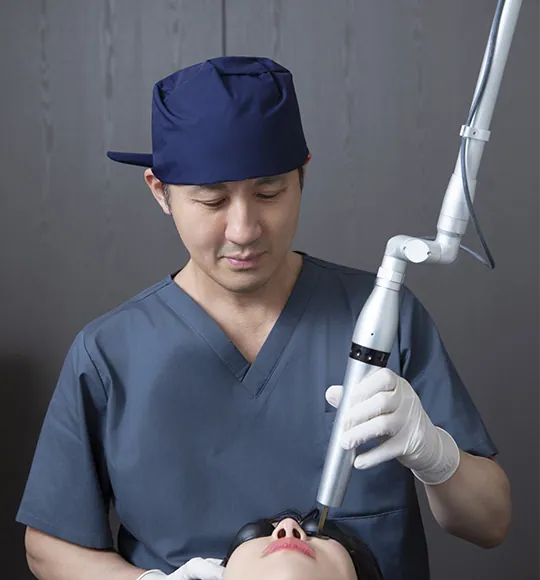
Written and medically reviewed by Dr. Jang Dong-hoon · Founder & Medical Director
Published · 10 min read

Is the round Korean vaccine scar on your upper arm something a laser can really smooth out, or will a session just leave it pink and slightly different?
Read this before you add an arm treatment to your Seoul plans.
By the end you'll know which of three scar types yours is, which methods suit each, what reviews get right and wrong about vaccine scar removal, and what decides the cost, so you can judge whether a session belongs on this trip and in your budget.
A Korean vaccine scar is usually the mark left by the BCG tuberculosis vaccine given in infancy. A flat or sunken BCG scar can often be softened and blended over several sessions of fractional laser or RF microneedling, though it rarely disappears completely, and a raised, keloid-type scar needs a different plan.
If you can't tell which kind yours is, send one daylight photo of the mark on WhatsApp, taken straight on with a coin beside it for scale, and ask a single question: is it sunken, flat or raised?
What is a Korean vaccine scar, and why do so many people have one?
BCG is a tuberculosis vaccine given to infants and young children in countries where TB is common, and the US Centers for Disease Control and Prevention notes it is not generally used in the United States. Korea has long been one of the countries that gives it in infancy, which is why so many people who grew up there, or elsewhere in Asia, carry a small round mark on the upper arm.
The vaccine goes into the skin itself, so the body heals the site like a small wound. Most people end up with a slightly sunken, round scar a few millimeters across. Some heal flat and pale.
A smaller group heal with a raised, firm scar, and in people prone to keloids that scar can keep growing past the original spot. Older adults sometimes carry a second, larger mark from smallpox vaccination, which usually behaves like other sunken scars.
So the phrase Korean vaccine scar covers at least three different kinds of skin. That difference decides everything that follows.
Sunken, flat or raised: three scars that need different methods
| Scar type | What it looks and feels like | What generally helps |
|---|---|---|
| Sunken (atrophic scar) | A round dip, often shiny, softer than the skin around it | Fractional laser or RF microneedling over several sessions |
| Flat, color-mismatched | Level with the skin but paler, browner or pinker | Energy matched to the color; a pale white mark changes least |
| Raised or keloid | Firm, lifted, may itch, can spread past the original site | Injections into the scar, silicone or pressure, with laser as an add-on |
The first row is where our menu fits most directly. A sunken scar has lost collagen, and treatments that make controlled micro-injuries prompt the skin to rebuild some of it. The American Academy of Dermatology lists laser resurfacing and microneedling among the treatments used for depressed scars.
For the second row, a brown or pink flat scar is a color problem more than a texture one. Pigment lasers such as PicoWay and redness lasers such as Vbeam Perfecta are on our menu, and which one fits depends on what the scan shows. A pale white mark has lost pigment, and adding color back is rarely possible.
The third row is different. The American Academy of Dermatology describes injections into the scar as a common treatment for keloids, says laser can reduce the height and fade the color, often combined with other treatments, and notes that no treatment consistently stops a keloid from returning. Injection treatment for keloids is not on the treatment menu this site describes, so a raised or growing mark starts with your history in consultation, and it may be better looked after by a dermatologist who treats keloids.

Which methods can soften a sunken vaccine scar?
If your Korean vaccine scar is sunken, the choice is between two kinds of energy.
- Fraxel and CO2 fractional laser place a grid of micro-beams into the skin, driving repair and collagen production. This works on the shiny surface and the edge of the dip. Fraxel and CO2 leave three to seven days of redness and flaking.
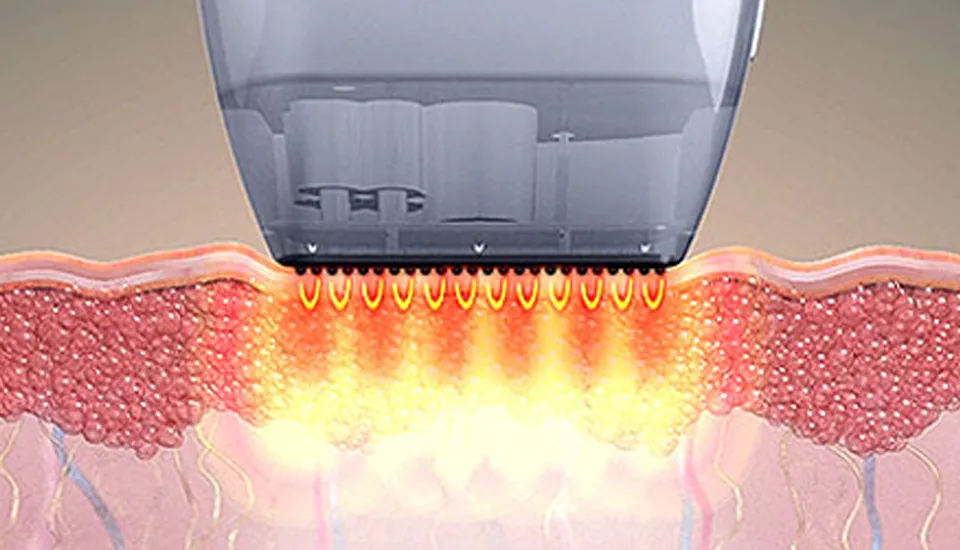
- Potenza and Intracel combine micro-needles with radiofrequency, sending heat into the dermis under the scar. Many doctors lean toward this kind of RF microneedling when surface heat is a concern, for example in deeper skin tones.
The edge of the dip guides the choice. A scar with a sharp, cliff-like rim casts a shadow, and softening that rim often changes how visible the mark is more than filling the center. A shallow, wide scar with a shiny base is more about texture.
Say you're 52, the mark on your left arm is about the size of a pencil eraser, sunken with a shiny base, it has never grown, and you have eight days in Seoul in late spring. we would usually lean toward one fractional session early in the stay, so the redness and flaking pass under a sleeve before you fly. One session won't finish the work. Fractional treatment for sunken scars usually runs as a series spaced weeks apart, so the aim of one trip is a softer edge and less shine, with more sessions on a later visit if you want them.
If your mark sounds like that example, send a second photo on WhatsApp taken at an angle in window light, which shows the depth of the dip better than a straight-on shot, and add whether it has ever grown or itched.
What do reviews and forum threads get right about vaccine scar removal?
Three claims come up again and again.
“One laser session erased it.” For a sunken scar this is unlikely. Fractional work improves texture gradually, and most people see a softer, less noticeable mark rather than skin that looks untouched. Single-session stories usually describe a flat, discolored mark, which is a different problem.
“The laser made it darker.” This can happen. Heat-based treatment can leave post-inflammatory darkening, and the risk is higher in deeper skin tones. It usually fades over months, and it is a reason to plan the energy around your skin type.
“It came back bigger after it was removed.” For keloids, this matches the medical picture: the American Academy of Dermatology says nearly all keloids return after surgical removal alone, which is why surgery is usually followed by another treatment. For an ordinary sunken BCG scar, regrowth isn't the expected course.
What decides the cost of treating a vaccine scar in Seoul?
Shot counts, tip type and the number of areas vary per person, so the figure is confirmed at consultation. These are the factors that move it for a vaccine mark:
- Scar type. A sunken scar and a flat brown one need different devices.
- Size and number of marks. One BCG scar is a small area; a BCG mark plus a smallpox mark is two.
- The device. For Potenza and Intracel, our price list writes the tip as its own line per session, separate from the session itself.
- Sessions and trips. A series spread over two or three visits to Seoul costs more in total than a single visit.
- What else you treat. If you're also having facial scars treated, the arm becomes one part of a larger plan.
You can ask on WhatsApp what it would cost for your own scar before you book anything. Send the coin photo and say how many Seoul trips you could make this year.
Risks, darker skin and who should wait
The common reactions are temporary. After Fraxel or CO2, expect three to seven days of redness and flaking. After RF microneedling, redness, mild swelling and pinpoint marks usually settle within a few days for many people.
As general medicine, these are reasons to wait or skip arm treatment for now:
- a scar that is raised, itchy, or has grown since childhood, or keloids anywhere else on your body
- infection, a rash or an open wound at or near the site
- recent isotretinoin, or medication that affects healing
- a fresh tan on the arm; avoid sun exposure and retinoids for a few days before laser work
- pregnancy or breastfeeding
If you have deeper skin, picosecond lasers and low-fluence toning generally carry less risk of post-inflammatory pigmentation than heat-driven options. Tell us your Fitzpatrick type when you message.
If, after you fly home, the area blisters, oozes, turns hot and painful, or darkens beyond the first week, see a doctor at home promptly and keep the area out of the sun. Results and recovery differ from person to person, and whether the arm is suitable for treatment is confirmed when the doctor examines it in person.
Fitting it into your days in Seoul
We're open Monday to Thursday 10:30 to 19:30, Friday 10:30 to 20:30 and Saturday 10:30 to 16:30, with a lunch break from 13:00 to 14:00 on weekdays. Sundays and public holidays are closed.
Lasers can often be done straight after the consultation. Fractional resurfacing is one of the treatments we'd rather you schedule with your week in mind, so plan a Korean vaccine scar session in the first days of your stay, not the day before your flight. The arm is easy to cover with a sleeve, which makes this one of the simpler areas to treat on a trip.
If you also want to treat acne scars on the face, this post on matching the laser to the scar covers that side, and you can read about Dr. Jang on our doctors page.
To start, one photo is enough: the mark in daylight with a coin beside it, plus your Seoul dates and the question you most want answered. The clinic answers messages within 24 business hours, and you can ask before you book anything on the Potenza booking page. When you come, the doctor examines the scar, reads the 3D scan with you, and recommends the plan that fits, which may be smaller than you expect.
The short version
- Most vaccine marks on the upper arm come from the BCG tuberculosis vaccine given in infancy.
- Sunken, flat and raised scars need different methods, so the type matters before the device.
- Fractional laser and RF microneedling can soften a sunken scar over a series; one session is a start.
- Raised or growing scars may be keloids, where heat alone is the wrong first step.
- Cost depends on scar type, size, device and tip, number of sessions and trips.
Questions patients ask
Does a BCG scar fade on its own in adulthood?
Its color can soften slowly over years, but the dip of a sunken scar usually stays the same once childhood healing is over. Treatment aims to soften the edge and texture, not to make the mark vanish.
Can the vaccine scar simply be cut out?
Cutting it out swaps a round dip for a line scar, and on the upper arm skin tension can widen that line. In keloid-prone skin, surgery alone is usually followed by regrowth. Surgical excision is not among the treatments we list on this site.
How many sessions will my vaccine scar need?
We don't give a number before seeing the scar. Sunken scars generally improve over a series of fractional or RF microneedling sessions spaced weeks apart, and the count depends on depth, size and how your skin heals.
Can I have the treatment on the same day as my consultation?
Often, yes. Lasers can usually be done straight after the consultation. Fractional resurfacing leaves three to seven days of redness and flaking, so it fits better early in your stay.
Can darker skin have scar treatment on the arm?
It can be planned for darker skin, but the risk of post-inflammatory darkening is higher with heat-driven devices. Picosecond lasers and low-fluence toning generally carry less of that risk, so share your Fitzpatrick type when you message.
Can I treat acne scars on my face on the same trip?
Yes, the same devices are used for acne scars, pores and texture. Plan the downtime for both areas together, since redness and flaking on the face are harder to cover than on the arm.
Results and recovery vary between individuals, and every treatment can have side effects. Prices are from the clinic's price list and are confirmed at consultation. This article is general information, not a diagnosis.
Sources
About the author
Dr. Jang Dong-hoon
Founder & Medical Director
Founder and medical director of THE Beautiful Clinic in Nonhyeon, Gangnam. He sees every patient's skin analysis before a plan is drawn, and reviews every article on this blog against what the clinic actually does.
Credentials in full