
Acne & pores
Pores bigger after 40? What a Korean pore treatment can and can't change
Pores stretch, clog and sag, and each cause needs a different fix. Agnes leaves 2 to 4 days of small scabs, and Fraxel leaves 3 to 7 days of redness and flaking.
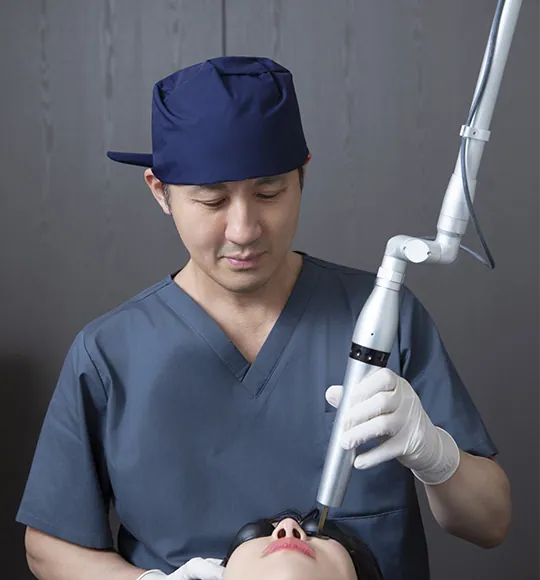
Written and medically reviewed by Dr. Jang Dong-hoon · Founder & Medical Director
Published · 8 min read
No Korean pore treatment closes a pore for good, because a pore is the opening of a hair follicle and oil gland your skin needs; what a clinic can change is how much the pore clogs, how much the skin around it has lost firmness, and whether an old scar is pulling it open.
If you're in your forties and the pores on your cheeks have started to look longer rather than rounder, you may also be wondering whether treatment in Seoul will leave you scabbed through the rest of a family trip. Our consultations open with a 3D skin scan, so the plan is built from what sits under the pore rather than from the treatment name you arrived with.
At the clinic the scan comes first, and then I consult, plan and treat myself, so the reasoning you hear in the room is the reasoning behind the plan. I'd rather you arrive with a photo and a question than with a treatment already decided.
To start, send one photo of your cheek on WhatsApp, taken from the side in window light without makeup. Add your Fitzpatrick skin type if you know it (the 1 to 6 scale of how easily skin burns or tans) and how many days you'll be in Seoul.
Can a Korean pore treatment close pores for good?
No. The American Academy of Dermatology talks about making pores less noticeable, and none of its advice claims to shrink the opening away. The reasons it lists for pores looking bigger include clogging, oily skin, acne, inflammation from scrubbing or picking, sun damage, and sagging with age.
That list is the useful part, because each cause has its own fix. Oil-driven pores respond to what happens in the gland. Firmness-driven pores respond to collagen. Scar-driven pores respond to resurfacing or needling that remodels the scar. A treatment chosen for the wrong cause can be done well and still change little.
Pore minimizers work on the surface, for the day
The jars and primers that come up when you search for a Korean pore minimizer mostly do one of two things: they fill and blur the opening for a few hours, or they cut oil so the pore looks less stretched. A salicylic acid cleanser and a retinol product at bedtime, both mentioned by the AAD, can help oily or less firm skin over weeks. Daily sunscreen protects the firmness you still have.
Keep doing those things after any clinic visit. Pore cleansing foams and pore cleaners from Korean shops follow the same rule as any cleanser: wash twice a day and don't scrub, because irritated skin shows its pores more.
Extraction empties the pore, and the gland refills it
Extraction empties a pore that is already full, but it leaves the sebaceous gland that filled it untouched. For oily, acne-prone skin where the same pores fill again within weeks, the target is the gland.
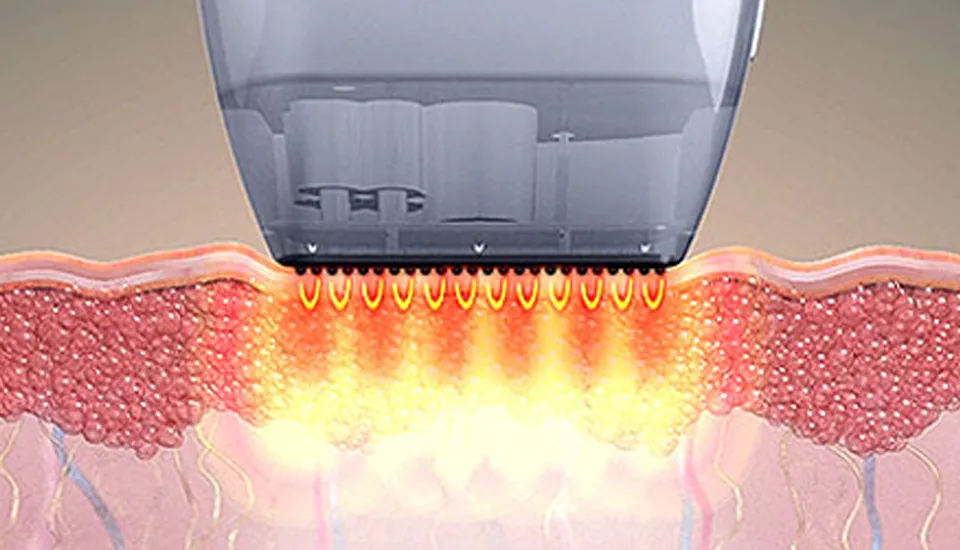
Agnes places radiofrequency through an insulated micro-needle directly into the sebaceous gland and nowhere else, bypassing the surface. It is done under topical anaesthetic, and the small scabs it leaves usually last 2 to 4 days. If your enlarged pores come with breakouts that follow your cycle, what Korean hormonal acne treatment in Seoul can and can't fix is the better place to start, and for deep, painful lesions see how many days Korean cystic acne treatment needs on a trip.
Why do pores look bigger after 40?
Because the skin holding them has changed. The AAD names sagging and sun-damaged skin among the causes. At that stage oil control alone does little, since the problem has moved into the dermis.
This is where a Korean pore treatment aimed deeper makes sense. Potenza combines micro-needles with radiofrequency for regeneration, firmness, pores and scarring; the heat placed in the dermis prompts it to rebuild collagen. Fraxel is fractional laser resurfacing, which treats tiny columns of skin and leaves the tissue between them intact so it heals from those edges. The AAD describes microneedling as a dermatologist treatment for scars whose results appear gradually, which matches what collagen remodelling does: it builds over months.
If the sagging itself is what bothers you most, a lifting plan may do more than any pore treatment; which wrinkle treatment suits which kind of line covers the firmness side in more detail.
Is pore surgery in Korea a real procedure?
People search for Korean pore surgery, but our menu has no surgical procedure for pores. What usually sits behind that phrase is the needling, gland and laser work above. Pitted pores left by acne are a scar question and are treated as scars, with resurfacing or RF needling rather than an incision. To ask about any of these, tick them on the booking page.
How many trip days does each pore treatment need?
| Treatment | What it works on | Visible downtime |
|---|---|---|
| Agnes | The sebaceous gland | 2 to 4 days of small scabs |
| Fraxel | Fractional resurfacing of skin and scars | 3 to 7 days of redness and flaking |
| Potenza | RF micro-needling in the dermis | Usually mild; confirmed at consultation |
Lasers and many skin treatments can often be done straight after the consultation. Treatments with visible downtime, such as fractional resurfacing and Agnes, are better scheduled with your week in mind. If you fly within a few days, I would steer away from Agnes and Fraxel, and a scabbing treatment belongs at the start of your trip rather than the day before a family dinner. For the gap to leave before the flight itself, see how many days each skin treatment needs before you fly.
If your trip is short, send your arrival and departure dates and ask which of these fits inside them.
Risks and side effects to know
The common reactions are temporary: redness, swelling and pinpoint marks after needling, small scabs after Agnes, and redness with flaking after Fraxel, on the timelines in the table above. Some people flush for a few hours after other treatments.
The risk that matters most on darker skin is postinflammatory hyperpigmentation, the brown marks that can follow any inflammation, including laser work. DermNet notes it is more common in darker skin types and can take months to fade. That is why your Fitzpatrick type belongs in the first message, and why sun protection after treatment is not optional.
As general medicine, these are reasons to wait or skip:
- isotretinoin now or in recent months
- an active infection, cold sore or inflamed cystic acne in the area
- a recent sunburn or fresh tan
- pregnancy, when many doctors postpone elective energy treatments
- fillers placed recently in the area to be treated
Before laser work, avoid sun exposure and retinoids for a few days, and come with clean skin and no makeup if possible. If spreading redness, heat, pus or darkening that keeps growing appears after you fly home, see a doctor where you live promptly. The CDC advises medical travellers to carry their treatment records and arrange follow-up care at home before leaving, so write down the treatment name and date yourself, then message us on WhatsApp with a photo.
Send the scan-day photo and your Fitzpatrick type before you book anything.
What to write in your first message
No photo can tell you whether gland, firmness or scar is driving your pores; a scan and a conversation can. Before you book flights, write down the products you use now and any treatments you've had in the past six months, then send that list on WhatsApp with the one question you most want answered.
The short version
- No treatment closes a pore; clinics change what stretches it.
- After 40, lost firmness often matters more than oil.
- Agnes works on the oil gland; Potenza and Fraxel work deeper in the skin.
- Downtime runs from same-day to about a week, by treatment.
- Darker skin types need a plan that lowers the risk of dark marks.
Questions patients ask
Do Korean pore minimizer products shrink pores?
No product changes the size of the opening itself. Primers blur pores for a few hours, and products that cut oil or contain salicylic acid or retinol can make pores less noticeable over weeks of use.
How many sessions will my pores need?
That is decided after the scan, once the cause is clear. RF needling and resurfacing usually work as a course rather than a single visit, and collagen change builds over months.
Can I have a pore treatment on the same day as my consultation?
Often, yes, for lasers and similar treatments. Treatments with visible downtime, such as fractional resurfacing or Agnes, are better scheduled around the rest of your week.
Can pore treatment be planned for darker skin tones?
With care. Heat-based treatments such as RF needling, Fraxel and Agnes carry a risk of dark marks (postinflammatory hyperpigmentation) on darker skin. Whether one suits you, and how, depends on your Fitzpatrick type and the 3D scan, so include your type in your first message.
Do I need to speak Korean for the consultation?
No. Consultations run in English and Bahasa Indonesia.
What should I avoid before a laser for pores?
Avoid sun exposure and retinoids for a few days beforehand, and come with clean skin and no makeup if possible. Mention any recent fillers, isotretinoin or medication that affects healing.
Results and recovery vary between individuals, and every treatment can have side effects. Prices are from the clinic's price list and are confirmed at consultation. This article is general information, not a diagnosis.
Sources
About the author
Dr. Jang Dong-hoon
Founder & Medical Director
Founder and medical director of THE Beautiful Clinic in Nonhyeon, Gangnam. He sees every patient's skin analysis before a plan is drawn, and reviews every article on this blog against what the clinic actually does.
Credentials in full